What the Return of New World Screwworms Means for Animal Owners
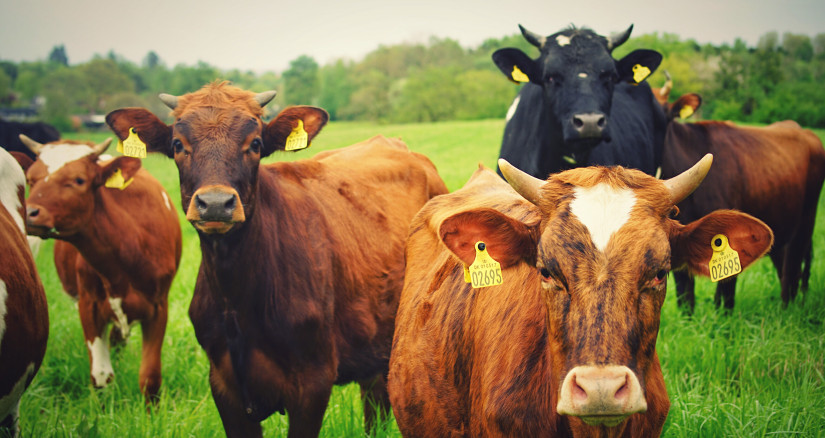
For pet parents, ranchers, and livestock farmers who follow current events in the animal health sector, stories about the New World Screwworm (NWS), or its scientific name, Cochliomyia hominivorax, have likely hit their radar. This topic can be very concerning and scary to anyone with pets or livestock, as it should be. However, knowing a little bit about this threat and what it means to each individual is crucial to interpreting stories that may be becoming more prevalent in the media.
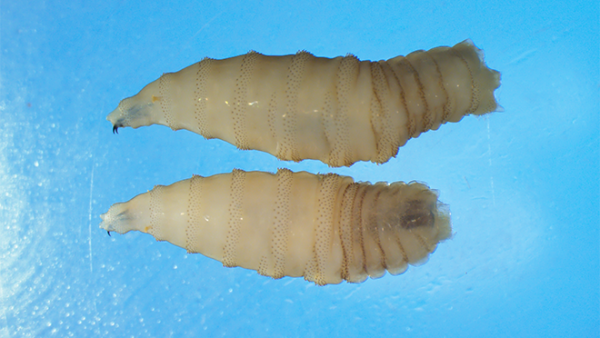
Photo by Centers for Disease Control and Prevention (CDC)
Why Screwworms Are Back in the News
For background, the NWS has been in the news for the past couple of years. The short history is that NWS was a problem in the US as early as the 1900s and remained a problem through the early 1980s. The US Department of Agriculture (USDA) states that NWS was eradicated in 1966 based on self-sustaining fly population data. However, many livestock experts know that even as late as the early 1980s, NWS cases existed in the US, likely due to livestock or wildlife carrying it from other countries.
Since 2025, other than an isolated outbreak in wild deer in the Florida Keys in 2016, NWS has slowly moved northward through Mexico and was recently identified in livestock and pets in Texas, primarily. The US Department of Agriculture (USDA) publishes the most recent updates about NWS as daily information about confirmed cases become available.
Why New World Screwworm Is So Dangerous
The difference between NWS and other flies is that NWS females can lay eggs near open wounds on any living animal, whereas other flies primarily lay eggs on dead animal carcasses. When NWS eggs hatch into larvae or maggots, those larvae burrow into and feed on their host's tissue. It doesn’t take much to realize that this quickly becomes an extremely painful situation and, if left untreated, could cause the death of the host animal. Death usually occurs from secondary infections due to tissue destruction from the NWS larva.
One key to making sure animals (and people) do not develop NWS problems is frequent and thorough inspection for any wounds or evidence of NWS infestation (myiasis) by livestock producers and pet parents. NWS can even lay eggs near mucous membranes such as the nose, eyes, or anus of animals. Any small wound, even where a tick bite occurs, can be all the NWS needs to lay eggs and cause problems.
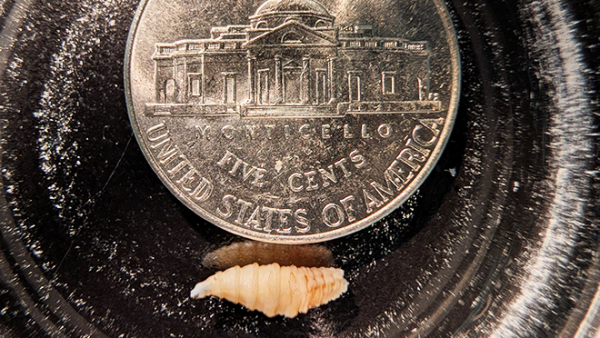
Photo by Center for Disease Control and Prevention (CDC)
How the U.S. Is Working to Control It
The question most people ask is: How did we eradicate NWS from the US before, and why is it back now?
Research that began as early as the 1930s led to advancements that culminated in what is known as the Sterile Insect Technique (SIT). Simply stated, this research enabled the laboratory rearing of NWS and, through irradiation, rendered the NWS flies reproductively sterile. This is important because, in the life cycle of the NWS, females mate only once, and if they mate with a sterile male fly, the eggs will not develop into the larvae that are so destructive. In essence, this breaks the life cycle of the NWS.
The key is providing enough sterile male flies to compete with the native (non-sterile) male NWS flies. The US has historically supported a facility in Panama that can produce 100 million sterile flies a week.
However, with the current situation, this is not enough. The USDA is currently investing to get a former SIT facility in Mexico up and running again, which currently breeds sterile fruit flies, that could produce up to 70 million NWS flies a week. The U.S. is also building a new facility in Texas that, once operational, can produce up to 300 million sterile NWS flies per week. The problem is that these facilities may not be operating until sometime in 2027, and more sterile male flies are needed now.
There are some alternative treatment options that could help bolster the current SIT capacity shortage. One is Novofly, developed by North Carolina State University and funded by the USDA, currently under review by the Environmental Protection Agency (EPA). Novofly genetically selects for male-only NWS flies, which then undergo the irradiation used in SIT to produce only sterile males. Currently, with SIT-produced flies, approximately 50% of the flies raised are male, as nature controls sex selection, whether flies are raised in a facility or in the wild. In theory, Novofly could double the amount of sterile male NWS flies available for SIT.
Additionally, a technique used in the past to help combat NWS, the Screwworm Adult Suppression System (SWASS), has been discussed recently. The name Swormlure was used for this product, which consisted of a mixture of chemical attractants that enticed adult NWS flies into a trap containing an insecticide that killed them. Proponents of SWASS argue that it has been used successfully in the past and should be deployed now, as more current versions have been developed and could be used in conjunction with SIT to help control. However, the USDA has concerns that current proposed SWASS may undermine the SIT by killing sterile male flies key to the SIT process.
Unfortunately, while it seems there may be other methods to combat NWS, they may require more time and political debate to implement.
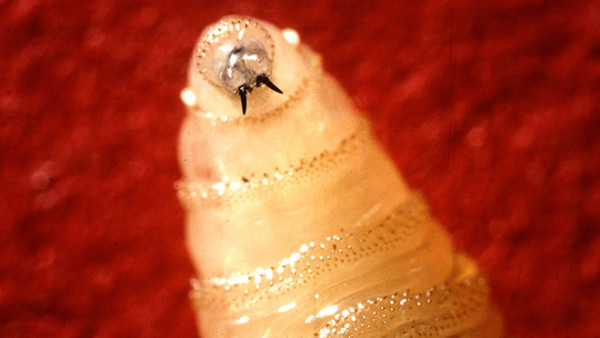
Photo by Centers for Disease Control and Prevention (CDC)
What Producers and Pet Parents Should Do Now
Currently, the southern U.S. border is closed for livestock import because of the threat of infested animals coming directly into the country. Because of this import restriction and overall low cattle numbers in the U.S. due to years of drought in key cattle-producing areas, the cost of beef will likely continue to rise. The spread of NWS may even threaten the availability of beef and other products associated with the U.S. beef industry.
So, what is the bottom line for livestock producers and concerned pet parents? The key is inspecting for wounds conducive to NWS and employing fly control measures. The FDA has allowed Emergency Use Authorization (EUA) for dewormers such as ivermectin for livestock and flea/tick/parasite medications for pets. These treatments are aimed at the NWS larva if an animal is infested with screwworm larva, but they do not prevent the adult female fly from laying eggs.
Many states have imposed restrictions on livestock movement, especially in areas such as Texas, which has reported documented cases of NWS. It is important for anyone with animals traveling to a southern U.S. border state now to remain ever vigilant in watching over their pets and livestock, especially if any open wounds are noted.
The U.S. has successfully pushed back the NWS problem before and will likely do so again; However, this situation is likely to worsen before it improves, as it takes time for the new SIT facilities to come online. What we need to learn from this is that when NWS is under control again, we cannot become complacent and let this happen again.
Follow us on LinkedIn for the latest updates on all things happening here at BSM Partners.
About the Author
Dr. Bradley Quest, DVM, is the Principal Veterinarian at BSM Partners. Dr. Quest is a leading innovator in the pet dental health products, having several decades of experience formulating in this category. He has practiced clinical veterinary medicine, developed and tested hundreds of pet food and health products, performs extensive animal health research, and helps navigate pet food ingredient approval for clients.
This content is the property of BSM Partners. Reproduction or retransmission or repurposing of any portion of this content is expressly prohibited without the approval of BSM Partners and is governed by the terms and conditions explained here.