
What is Scientific Rigor and Why Does it Matter?
Sensational news and headlines are a strategy to help gain consumers’ interest in a story. This has become increasingly common in the stories we see, and pet food and pet health products are no exception.
One common tactic used by marketers is to create fear in consumers. This type of messaging suggests that if pet parents don’t use a certain product or if they use another specific product, there will be a negative outcome for their pet. The pet food and pet health space is no different than any other consumer packaged goods (CPG) industry in this way.
Pet food advertisements sometimes use a fear strategy to convince pet parents that what they may be feeding their pet is actually harming them. The message typically goes like this: If they feed the advertised pet food or use the promoted product, their pet will thrive, but if they continue feeding their current diet or using a competitor’s product, their pet will have all kinds of health problems.
This is a prime example of fear-based marketing. The problem is that few, and maybe none, of these claims were substantiated through actual scientific research, documented in written manuscripts and, finally, reviewed by expert colleagues to confirm the scientific conclusions.

Photo by ChatGBT
Pet product claims should always be substantiated through published, peer-reviewed scientific research whenever possible. This is the best way to know the statements and claims made by a product are actually valid, and not just unsubstantiated marketing rhetoric from a paid spokesperson or even just an actor who may not know anything about pet health. Sometimes marketing claims about a certain pet product sound good, but there may be little to no substantiable research to credibly back them up.
Recently, “research” was shared via newsfeeds and branded websites, not a peer-reviewed publication (we’ll talk more about peer-review later), regarding contaminants in different dog food categories. Many flaws exist in this “research” and the conclusions communicated about it, as shared in my previous article here.
In some cases, such as in this “study,” pet parents may be made fearful to feed pet food that, in reality, is safe and nutritious and that their pets have already been eating. In this case, a decision to stop feeding a pet diet based on this “research” is a classic example of using consumer fear and unsubstantiated claims to help drive pet parents’ decisions. With this kind of approach, the goal isn’t so much to support the pet as it is to support the advertising brand’s bottom line.
Levels of Evidence, Levels of Scientific Rigor
You may be asking yourself, “How do I know what to believe about pet food and pet health products in general?” And that’s a valid question.
When it comes to scientific rigor in animal studies, the research community likes to refer to something called “Levels of Evidence.” This simply means that there is value and validity in different types of research and publications, but they do not all have the same level of significance. At the highest or most credible level are systematic reviews and meta-analyses. These are defined as data from multiple independent peer-reviewed studies that are combined and reviewed together to help address a common research topic. The high value of this is that data from multiple studies can often be combined to raise the value of the overall research and conclusions. An example relating to pet food claims reviewed multiple studies and identified many gaps in current nutritional claim research.
The second most valuable form of research to substantiate conclusions is referred to as randomized controlled studies. These are defined as randomly assigning subjects to a specific group receiving the studied food (test article) and another group not receiving it but eating a completely different product (control article). All variables are accounted for, so conclusions drawn from the data have an extremely high level of confidence. A good example is this recent study researching pet food diet categories as they relate to cardiac health in dogs.
The third most valuable type of research is referred to as a cohort study. These are simply defined as following a similar group of pets over time to evaluate whether a particular factor affects their health. There may be more than one group in a cohort study, in which one group is exposed to a particular factor (food, ingredient, etc.) and the other group is not. One downside to cohort studies is that some variables and outside influences (refered to as “uncontrolled variables" in research settings) may come into play if done in real-world settings and not in a controlled research environment, such as feeding different foods and treats in addition to a tested diet in a real-world setting. However, one benefit of a cohort study is that animals can be followed for a long time, as they can be done in the home and commonly are. An example of a cohort study in golden retrievers followed these dogs for at least six years to measure various health parameters.
Next in our descending order of research significance are case studies. This research evaluates a group of animals having a condition and commonly compares them to a similar group of animals that don’t have the condition. It tries to identify possible correlations and differences to help guide more controlled research, such as randomized case-control studies. The downside to case-control studies is that they are generally retrospective in nature, which means they evaluate data after it happens, making accounting for uncontrolled variables more difficult, which makes this type of research less rigorous. In this case study, for example, the primary factor considered was owner-provided diet histories, which we know is typically not the most reliable data. This requires pet parents to recall what they fed their pet and for how long over the pet’s lifetime. This information is crucial to the validity of this research, but given accurate memory of diet history over a pet’s lifetime is low, this research scores lower on the scientific Levels of Evidence scale.
The least useful form of published scientific evidence is opinion pieces. Even though the author(s) may have much experience in a given field, such as being a nutritionist and writing about nutrition topics, it must be remembered that actual peer-reviewed research allows data to be scrutinized and analyzed by peers, and simply writing about one’s experiences or opinions on a topic does not constitute research.
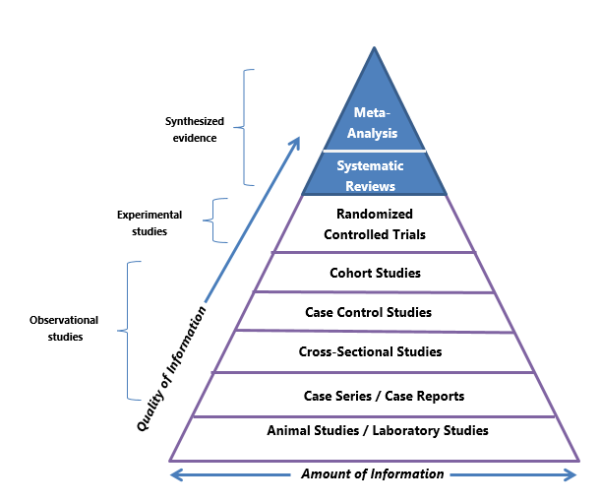
Photo by UC Davis
Navigating the Realm of Research
There is much about research in pet food and pet health products that can be confusing to pet parents. Red flags should be raised when pet parents see companies or researchers use stories or messaging that tries to “scare” pet parents into using a certain product or categories of products. This is no different than in other CPG industries, but the difference may be that we all think of our pets as family, and the discerning pet parent is just trying to look out for their pet’s best health interests.
The collaborative research experts at BSM Partners design, conduct, interpret, and publish many kinds of rigorous pet health research and encourage pet parents and pet health companies to highly scrutinize anything that is communicated as being sound research, which may actually be more like fear-based marketing tactics masquerading as research.
Follow us on LinkedIn for the latest updates on all things happening here at BSM Partners.
About the Author
Dr. Bradley Quest, DVM, is the Principal Veterinarian at BSM Partners. Dr. Quest is a leading innovator in the pet dental health products, having several decades of experience formulating in this category. He has practiced clinical veterinary medicine, developed and tested hundreds of pet food and health products, performs extensive animal health research, and helps navigate pet food ingredient approval for clients.
This content is the property of BSM Partners. Reproduction or retransmission or repurposing of any portion of this content is expressly prohibited without the approval of BSM Partners and is governed by the terms and conditions explained here.