
Vet Formulated: Now Tell Me Something Useful
Walk through the pet food aisle of almost any retailer today and you'll quickly notice a familiar phrase appearing on bags, cans, and packages across nearly every category: “vet-formulated.”
It is a good claim, and in many cases, it is an accurate one. Veterinarians play an invaluable role in our pets’ wellbeing, including nutrition, particularly when products are intended to support specific health conditions, therapeutic applications, or other clinically meaningful outcomes. Their understanding of physiology, disease processes, and patient care provides an important perspective that helps ensure nutritional treatment plans are grounded in both science and clinical practice.
As consumers have become more focused on the health and well-being of their pets, the phrase “vet-formulated” has gradually evolved beyond a simple description of who participated in developing a product. For many pet owners, it has become synonymous with scientific credibility, quality, safety, and trust. That evolution is understandable, but it also raises an important question.
What Does The Phrase "Vet-Formulated" Actually Tell Us?
The answer is both straightforward and more nuanced than most people realize. The phrase tells us that veterinary expertise contributed to the development of the product. What it does not tell us is how the product was developed, what evidence supports it, how its performance was validated, or what systems are in place to ensure the finished product consistently delivers what the formulation was designed to achieve.
Those are very different questions, and they deserve equally thoughtful answers.
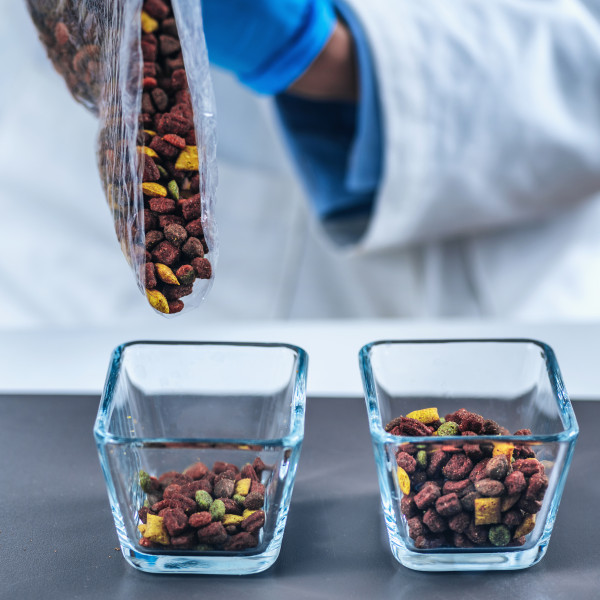
Photo by microgen
The Difference Between Credentials and Confidence
Imagine asking two pet food companies the same question: Why should I trust your food?
The first company responds, "Our diets are vet-formulated." That answer should inspire confidence because veterinary expertise can be an important component of responsible product development. Now imagine a second company responding differently: "Our diets are supported by feeding studies, developed alongside nutritionists, food scientists, veterinarians, validated through research, manufactured under robust quality systems, and continuously evaluated to ensure they perform as intended."
Both companies mention veterinarians. Only one begins to explain why the product deserves consumers' trust.
The difference may seem subtle, but it reflects a much broader truth about product development. Credentials help explain who participated in creating a product. Scientific evidence explains why that product should inspire confidence. While both are important, they are not interchangeable.
One of the challenges with evaluating pet food is that consumers often encounter complex scientific work through simple marketing statements. Claims such as “natural,” “human grade,” “limited ingredient,” “grain-free,” and “vet-formulated” all communicate something, but none of them tells the complete story. Each represents only one piece of a much larger process. Understanding that broader process is what ultimately allows pet parents to make more informed decisions.
That process begins with asking the right questions.
The Right Expertise for the Right Questions
Not every pet food is designed to accomplish the same objective, and not every product requires the same type or level of expertise. A therapeutic renal diet presents very different scientific and clinical challenges than a maintenance diet for healthy adult dogs. A product intended to support gastrointestinal disease requires different considerations than one developed for active sporting dogs.
When products are designed to influence health outcomes or support specific medical conditions, both veterinary and nutrition expertise become indispensable, ensuring the product is grounded in clinical understanding as well as sound nutritional science.Other products may rely more heavily on expertise in ingredient functionality, food processing, manufacturing, quality systems, regulatory affairs, or consumer behavior. None of those disciplines is inherently more important than another. They simply answer different scientific questions.
That distinction is easy to overlook, but it reflects one of the most important principles in developing a product: The goal is to involve the right experts to answer the right questions.
This principle extends well beyond pet food. For example, in commercial aviation, pilots possess extraordinary expertise and play an essential role in safely operating an aircraft, yet no passenger would expect pilots alone to design the airplane they are flying. Safe aircraft are the result of engineers, materials scientists, manufacturing specialists, quality professionals, maintenance experts, regulators, and pilots working together to solve different problems.
Confidence in air travel comes from the strength of the entire system rather than from any single profession. Product development in pet food follows much the same philosophy. Exceptional products emerge when multiple disciplines contribute their unique expertise throughout development, validation, manufacturing, and continuous improvement.
Photo by FabrikaPhoto
Where the Real Science Begins
One of the most common misconceptions about product development is that the work is largely complete once the formulation has been finalized. Formulation is an early step rather than the end of the scientific process. A diet may meet every nutritional requirement on paper, yet manufacturing conditions can influence nutrient availability, ingredient interactions, palatability, shelf stability, and consistency from batch to batch. Ingredient variability, processing conditions, and production scale all introduce challenges that cannot be solved through formulation alone. Ensuring that a product performs consistently over time requires research, manufacturing expertise, quality systems, and continuous validation.
Those systems are every bit as important as the formulation itself because they help translate scientific intent into consistent product performance.
This is why claims such as “vet-formulated” should be viewed within their proper context. The phrase communicates that veterinary expertise contributed to the product, but it cannot explain the depth of research behind the formulation, whether feeding studies were conducted, how manufacturing consistency is maintained, what evidence supports the product's claims, or how performance is monitored over time. Those questions require a much broader conversation than any statement printed on the front of a package can reasonably provide.
Fortunately, consumers are becoming more sophisticated in the questions they ask. Pet owners increasingly want transparency rather than assumptions, evidence rather than implication, and scientific accountability rather than marketing language alone. That shift benefits everyone. It encourages companies to invest in meaningful research, multidisciplinary collaboration, robust quality systems, and continuous improvement instead of relying solely on simplified messaging to build consumer confidence.
At BSM Partners, that philosophy has shaped how we approach product innovation. Rather than viewing product development through the lens of any single discipline, we intentionally integrate expertise across different workstreams such as: Nutrition Science & Formulation, Veterinary & Clinical Affairs, Regulatory Affairs & Quality Systems, Applied Research & Animal Science, and Market Intelligence & Competitive Analysis. Each workstream contributes a different perspective, allowing scientific, manufacturing, regulatory, and consumer questions to be addressed together rather than independently. The result is not simply a formulation, but a comprehensive development process designed to produce products that consistently perform as intended.
None of this diminishes the value of veterinary medicine. If anything, it reinforces it. Veterinary expertise is indispensable when clinical insight is needed, just as nutritional science, food science, quality systems, and regulatory expertise become indispensable when their respective questions arise. The objective is not to elevate one discipline above another but to recognize that meaningful innovation depends on bringing together the appropriate expertise to solve increasingly complex problems.
The Questions That Matter Most
The next time you evaluate a pet food, don't stop at asking who formulated it. Ask what research supports it. Ask how its performance has been validated. Ask what systems ensure manufacturing consistency and food safety. Ask how the company knows the product continues to perform as intended. Those answers reveal far more about the quality of a product than any single phrase printed on the front of its packaging.
In the end, consumers are not placing their trust in a veterinarian, a nutrition scientist, or a company alone. They are placing their trust in a process. The strongest products earn that trust because the right experts were brought together to answer the right questions, every important decision was supported by evidence, and the systems behind the product were designed to deliver on the promises made to pet owners. That, more than any single claim, is what truly builds confidence.
Follow us on LinkedIn for the latest updates on all things happening here at BSM Partners.
About the Author
As Vice President of Product Innovation at BSM Partners, David Perez brings nearly 20 years of experience in the pet food industry, specializing in formulation and product development. He has played a key role in driving innovation, developing products that align with evolving industry trends and consumer needs. Always looking ahead, he enjoys tackling challenges and finding creative solutions that push the industry forward. Outside of work, David can be found competing on the tennis court, composing music in his home studio, or enjoying a good scary movie—always bringing the same curiosity and energy to everything he does.
This content is the property of BSM Partners. Reproduction or retransmission or repurposing of any portion of this content is expressly prohibited without the approval of BSM Partners and is governed by the terms and conditions explained here.