
Trending in 2026: Precision, Prevention, and What They Mean for Pet Health and Nutrition
The wellness economy is being rewired, according to Euromonitor International. Health and well-being are no longer confined to clinical settings; they’re now achievable in the comfort of our own kitchens, bedrooms, and sometimes, at the touch of a button. People are shifting from reactive to proactive, from generic to personalized, and from products that “feel right” to those with proven effectiveness.
“Consumers want clinical-level, high-tech solutions as everyday wellness tools,” Euromonitor shared in its report. “Traditional routines are traded in for advanced therapies and precision products.”
We’ve already discussed the first two trends Euromonitor expects to drive global innovation in 2026—Comfort Zone and Fiercely Unfiltered. Let’s take a deep dive into this next trend, “Rewired Wellness,” to explore how people and pets are taking their health into their own hands (and paws, I suppose).
Science Meets Self-Care
If you’ve been online or turned on your TV in the last six months, you’ve probably been served an ad for some kind of cosmetic, medical support, or diagnostic device that you can use within the comfort of your own home. It was probably a red therapy light mask, or Cologuard, or the Aura ring. The ad probably touted science-backed technology, and you don’t even have to leave your house?! Goodbye, endless appointments; hello, movie marathon.
That’s the trend—consumers want the outpatient experience when it comes to self-care, and they’re willing to pay premium for that convenience (or, in some cases, for the opportunity to avoid an invasive test or procedure, like a colonoscopy) as long as the product is backed by science.
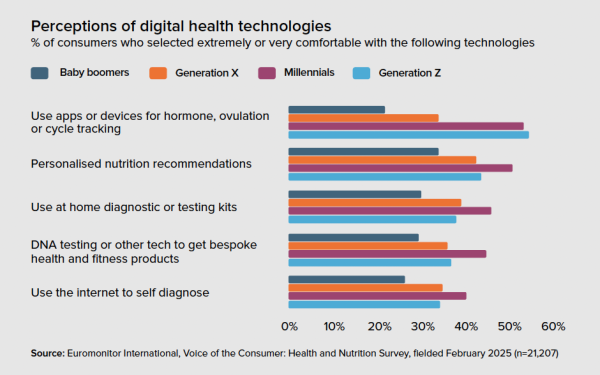
According to Euromonitor’s “Voice of the Consumer: Health and Nutrition Survey” conducted in February 2025 with more than 21,000 global consumers, nearly 40% of people surveyed reported they’re“comfortable using at-home diagnostic or testing kits.” Additionally, three in four people said they track their health with a device or mobile application.
While Millennials and Gen Z consumers are slightly more willing to integrate these technologies than older generations, Gen X and Baby Boomers, at-home adoption of smart technologies, diagnostic kits, and even medical devices is booming—and it’s not just for us.
Source: Euromonitor International
Connected Care
Smart pet technologies are becoming more and more common as owners recognize they can keep tabs on their pets in ways they simply couldn’t before. From tech-enabled collars to smart feeders, these products have come a long way from rudimentary GPS trackers of the early 21st Century. Pet owners today can enjoy constant connectivity with their companions, monitoring behaviors and biomarkers to identify potential health issues before they become vet bills.
Beyond keeping tabs, even rehabilitation tools like this PEMF (pulsed electromagnetic field) mat are no longer limited to clinical settings. Pet owners can purchase this technology to have at home, supporting on-demand, scientifically backed pain and inflammation relief for their pets.
At-home testing kits can also provide peace of mind to helicopter pet parents. (I say that lovingly—I am one.) Genetic tests have been around for a while, allowing pet owners to glean insights into their dogs’ and cats’ ancestry and breed history. This is particularly enticing for adopters, as the most pervasive canine companions in America are actually of the mixed-breed variety. Plus, these tests have evolved to provide insights not only about ancestry, but also about health predispositions and even behavioral traits that may help owners understand how to care for their pet more effectively.
Today, at-home testing kits for pets don’t stop at breed. There are direct-to-consumer kits that test for age, food sensitivities, allergies, gut microbiome makeups, and possibly more. I’m not endorsing any particular test, as I have my own questions about how truly “science-backed” they are, but the concept is ostensibly on-trend with consumers’ desire to know more, know sooner, and know in a way that feels like they’ve done it on their own terms.
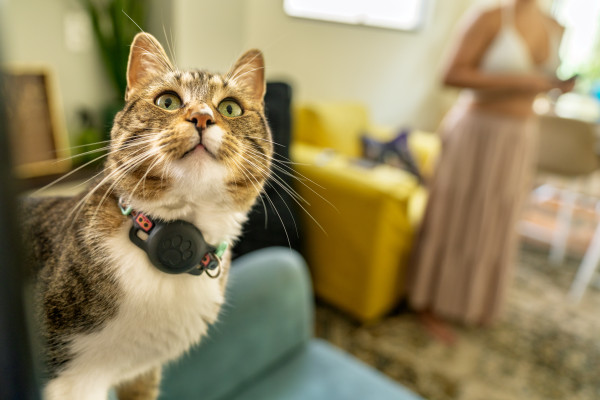
Photo by GSR PhotoStudio
Here for A Good, Long Time
The trend toward at-home, science-backed self-care for people and pets dovetails nicely with another trend toward longevity. Whether through dietary support like supplements, mobile games that double as cognition maintenance, or preventive therapies and treatments, consumers are investing in their future selves today, all in the name of living better for longer.
The way we talk about longevity has shifted to accommodate this trend. We used to be focused on “lifespan” as a measure of health and quality of life, but as more emphasis is placed on the quality-of-life aspect, we’ve shifted our language to incorporate the idea of “health span.” In other words, let’s not just focus on how long we’re living, but also how well we’re living along the way.
As the wellness economy continues to grow, so will the market for longevity products and services. And as more consumers adopt this mindset, they’ll also adopt it for their pets.
There are two schools of thought in the companion animal longevity space right now—nutritional supplementation and pharmaceutical support. On the nutritional supplementation front, there are a handful of companies developing soft chews and powders that target preventive health support.
Leap Years is designing what it describes as a “cellular health system” for dogs, combining two emerging compounds (an NAD+ precursor and a senolytic compound) to target “the underlying causes of aging itself.” Arterra Pet is taking a similar approach through its soft-chew and powder supplements, but through various proprietary ingredient blends that work together to support overall health and slow the metabolic aging process. Then there’s Longevity15, the newest nutritional entrant to the canine longevity market. This approach focuses on one nutrient—pentadecanoic acid (C15:0), an essential fatty acid—to slow and even reverse cellular aging, as they put it. The concept stems from Fatty15, which is this ingredient’s application in the human supplement market.
On the pharmaceutical front, a company called Loyal has cleared two regulatory hurdles—safety and efficacy—with the FDA Center for Veterinary Medicine (CVM) and is now well on its way to becoming the “first FDA-approved longevity drug for pets.”
Regardless of the route, aging is being reframed as something measurable, manageable, and potentially modifiable. Whether through chews or clinical compounds, consumers are signaling willingness to invest in prevention long before symptoms emerge.

Photo by Christopher Boswell
Too Much of A Good Thing?
Finally, let’s talk about protein. Sometime over the last 10 years or so, “protein” became a proxy for quality. Consumers see it on a label and assume it’s better, healthier, more premium, more natural. At the same time, we put carbs in the corner and began recognizing “grain-free” and “ancient grains” claims as aspirational. We forgot that nutrition is all about balance, no silver-bullet solutions.
According to Euromonitor, nearly 1,200 new products with a high-protein claim were launched online between Sept. 2024 and Aug. 2025. At this point, the fact that this is a trend is indisputable. What remainsunclear is whether the trend truly serves our health and wellness, or if we’ve lost the plot somewhere along the way.
As human beings, the general rule of thumb is 0.8g of protein per kilogram of your weight per day. So, a 160-lb person (72.5-kg) needs a minimum of about 58g of protein per day. For pets, the Association of American Feed Control Officials (AAFCO) sets minimum protein requirements for dogs and cats, but there is no current maximum recommendation based in science.
It’s important, however, to remember that minimums signal survival. This is the absolute least you can do to maintain baseline physiological functions. Maximums protect us against toxicity, but since there are no clear maximum guidelines for protein in people or pets, the food industry has capitalized on the trend through high-protein snacks, beverages, ready-made meals, and even high-protein varieties of items we previously viewed as junk food (think: baked goods, ice cream, donuts, etc.).
Adult dogs require 56.3g of protein per 1,000 kcal, whereas adult cats require 65g of protein per 1,000 kcal. This essentially means the diet delivers 56.3g or 65g of protein with every 1,000 kilocalories. You can think of this like fuel efficiency. Your car will take you a certain number of miles on a gallon of gas; your dog will eat a certain amount of protein per 1,000 kilocalories. Yet, many commercial pet diets available today provide much more protein than the minimum requirement.
This is well-meaning, but it’s not harmless. Medical and veterinary institutions have begun to warn us against too much protein, claiming it “can contribute to the development of diseases and other health issues,” including cancer, reduced kidney function, and heart disease. Higher meat consumption specifically is linked to higher saturated fat and cholesterol intake, as well as higher levels of phosphorus, which can spur kidney disease down the road for both people and pets. Additionally, excess protein is stored by the body as fat, which could contribute to the majority of dogs and cats in the United States being overweight or obese.
Not only is this a question of optimal health and wellness; it’s also a sustainability question for the global food supply. I won’t go down that rabbit hole here, but check out this article authored by my colleague, Beth Jarvis. And if you’re looking for more resources on the pet obesity epidemic, look no further than this excellent two-part series by my colleague, Dr. Stephanie Clark.
Animal-derived protein remains the backbone of pet nutrition, with a continued shift toward premium, diverse, and high-value protein sources that mirror human food preferences. This parallels broader trends where pet owners increasingly demand quality, transparency, and ingredient stories similar to their own food choices.
The question, though, isn’t whether protein is important—it is! There’s simply more to the story. The real question is whether we’ve put protein on a pedestal without fully understanding the tradeoffs. Biology doesn’t operate on marketing logic, after all, and in a market that equates excess with excellence, restraint may become the most disruptive innovation of all.

Photo by Lifeonwhite
Evidence Becomes the Edge
Across self-care technology, longevity science, and nutrition, brands have an opportunity to lead the next chapter of wellness innovation. But they also have a responsibility to do so with integrity, transparency, and mindful intention.
Don’t settle for novelty—products must be credible to appeal to increasingly skeptical and science-minded consumers. Establishing strategic partnerships with veterinary professionals, ingredient specialists, or subject-matter experts can become competitive differentiators in an environment where convenience, practical benefit, and fidelity outperform marketing speak almost every time.
When you boil it all down, Rewired Wellness is really about precision. Companies and brands that thrive within this trend are those who take this to heart, pairing innovation with scientific evidence, personalization with transparency, and empowerment with accountability.
As prevention, precision, and personalization reshape the wellness landscape, brands must move past buzzwords to build products grounded in science and strategy. BSM Partners works alongside companies across nutrition, regulatory, innovation, and commercialization to turn evolving consumer expectations into sustainable growth, so that people and pets can live their best lives every day.
Follow us on LinkedIn for the latest updates on all things happening here at BSM Partners.
About the Author
Jordan Tyler is the Director of Media at BSM Partners and co-host of the Barking Mad podcast. She has more than seven years of experience reporting on trends, best practices and developments in the North American pet nutrition industry. Jordan resides in Bentonville, Arkansas, with her husband and their three furry family members.
This content is the property of BSM Partners. Reproduction or retransmission or repurposing of any portion of this content is expressly prohibited without the approval of BSM Partners and is governed by the terms and conditions explained here.