
Trending in 2026: Asia’s Rising Influence on Global Pet Care
Globalization has brought Western pet care trends like humanization and premiumization to markets halfway around the world to Europe and Asia, but this cultural exchange works both ways.
So far, we’ve detailed how Euromonitor’s first three global CPG trends for 2026—Comfort Zone, Fiercely Unfiltered, and Rewired Wellness—are likely to play out in the pet industry, including some ways these trends have already become part of our understanding of pet care.
Let’s dive into Euromonitor’s fourth and final trend for 2026, dubbed the “Next Asian Wave.”
Asian Waves
Cultural influence has been exchanged between Western and Eastern societies for decades, in categories the go far beyond pet food.
Kpop cemented itself as a cultural force when Kpop Demon Hunters took home the Oscar for Best Animated Film this awards season, and its title track, “Golden”, won Best Original Song. The first-ever Kpop song to win a Grammy, “Golden” took 2025 by storm, reaching number one on the Billboard Hot 100 and commanding serious attention across the Western world.
While Kpop’s dazzling appearance on center stage may be new to the masses, “Hallyu” or the “Korean Wave” has been flowing out of Korea for decades now. Kpop, K-dramas, Korean skincare, and Korean cinema (with Parasite winning the coveted Academy Award for Best Picture in 2020) have all swept ashore worldwide.
While perhaps experiencing the biggest boom over the past decade, South Korea is hardly the only Asian country to see its culture spread across the continents. Japan’s anime, manga, cinema, and video games are popular in the West, and China made its own wave with 2024’s Black Myth: Wukong being one of the year’s top-selling video games, particularly on Steam. Don’t forget phenomena like the Labubu craze and well-established icons like Pokémon, not to mention Korean skin care routines, TikTok trends, mukbangs, and Temu.
According to Euromonitor’s Top Global Consumer Trends 2026, “Around the world, the perception of Chinese brands is shifting as these players blend affordability and innovation with intuitive, digital-first experiences.” In other words, we can all expect the flow of Eastern culture and commerce to the West to continue, despite the intricate nuances between these two markets.
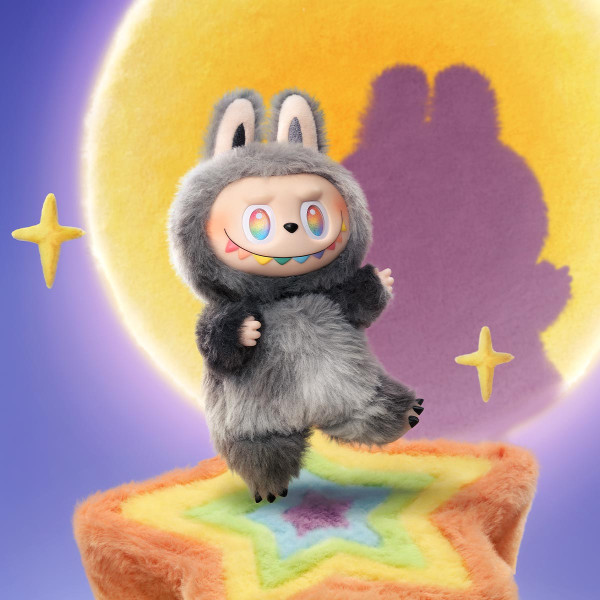
Photo by Pop Mart
A New Hallyu for Pets
The US market is well accustomed to Asian brands such as Toyota, Hyundai, Samsung, and Sony, and more recently TikTok, to name a few. The more recent rise of social media, however, has offered pet owners everywhere new and exciting avenues for discovering products and brands across the world at the touch of a button, through platforms like TikTok (which was, until very recently, owned by a Chinese company) and YouTube. In fact, Euromonitor reports that as of early 2025, 25% of TikTok users globally—estimated at just under 2 billion—had made at least one purchase through TikTok Shop.
Asian countries are exporting culture through mass media, as well as through consumer product categories like skincare and pet care, and the Asian pet care market has taken pet humanization and innovation to heart.
In the United States, pet care brands often offer diverse product portfolios that enable them to meet a variety of pets’ and pet owners’ needs. In Asia, products are more often part of “care ecosystems,” turning regular routines into rituals, occasions, and precious bonding moments between pet and owner. Instead of treating each SKU-like a standalone offering, brands are building coherent care portfolios that provide a one-stop shop for pet owners to care for—and, frankly, spoil—their beloved pets.
This is especially true in today’s cat care market across Asia. In the nutrition space, innovations along these lines include lickable liquid treats in sachets that let you hand-feed your cat, broths and soups for comfort and hydration, gels and mousses for picky eaters, or even texture-layered treats for engagement. Functional benefits are wrapped around micro-moments that are also enjoyable for both pet and pet parent. Rather than isolated choices, products are marketed more as components of a complete system.
The Thai pet market is also gaining momentum as owners humanize their relationships with pets, demand higher product quality, and become increasingly loyal to specific brands. Since 2011, the Thai pet market has grown at 10% per year, becoming the second-largest Asian market for companion animals in 2019, after China.
The Splash Zone
Like every big wave, there will be runoff. Little pools will form puddles of water that’s left over, and those puddles will eventually evaporate and cease to exist. This will also happen to brands that fail to consider the distinct historical and cultural nuances of the global pet care market, particularly the Asian arm.
Nearly 20 years ago, the melamine crisis rocked the CPG world when counterfeit ingredients were sold from China into the United States and incorporated into countless pet food and infant formula products. Importers believed the ingredient was wheat gluten or rice protein concentrate, but it was actually wheat flour tainted with melamine, which caused a fatal chemical reaction when ingested by pets. This led to hundreds of dog deaths across the United States, as well as an infant formula fiasco that impacted approximately 300,000 young children and infants across China.
This was the start of a trust rift that’s been widening across the pet industry for two decades. China has long been a supplier of many ingredients in pet food, particularly as vitamin and mineral mixes, and there have been efforts to diversify these supply chains, not only to reduce reliance on them but also due to consumer concerns that ingredients sourced from China simply aren’t safe.
Over the past few years, China has expanded its domestic pet food production, leading to a decline in US pet food exports to China by 2024. On the import side of the trade divide, tariffs have only made matters more precarious between the United States and China. These considerations remain important even amid the trend-setting excitement seen across the Asian pet care market.
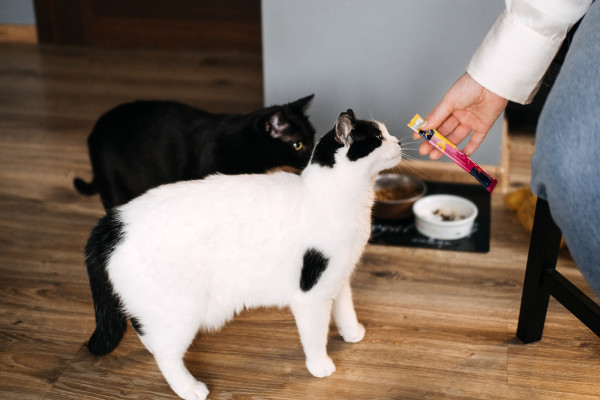
Photo by IrynaKhabliuk
Golden Opportunity
This shift from domestic to international brands enables Asian countries to export their brands and values in one fell swoop. Focused on creating meaningful moments, sharing joy, and delivering high-quality products, these brands offer excitement and true nutritional innovation to the US pet market, the latter of which has noticeably plateaued in the United States.
With less familiar textures like gels and mousses, Asian pet food brands are elevating the feeding experience to mimic that of a human’s, meant to comfort and enjoy more than to simply deliver nutrients. If you’ve ever fed your cat a lickable spoon treat, you know how meaningful it can be to share that experience, purrs included. It’s not just the products themselves that Asia is exporting, but the values behind them, too.
For US pet care brands looking to capitalize on this “Next Asian Wave,” target hydration, sensory-first innovation that fits into a ritual or a complete ecosystem of care. Lean on emotionally resonant messaging and digital-first or digitally enhanced experiences, whether it’s through seamless shopping experiences, personalization, or functional health benefits for the pet.

Photo by Korea.net / Korean Culture and Information Service (Jeon Han)
Breaking Records, Breaking Boundaries
Kait was fortunate enough to be able to attend one of TWICE’s LA concerts this January. Possibly the biggest girl group in the world currently, TWICE has broken international boundaries, becoming big in their home state of Korea, in Japan, and now in the West. Watching them perform their Kpop Demon Hunters hit, “Takedown,” truly brought home the idea that in our globalized economy, consumers have the privilege of being able to find brands that align with our values even beyond our borders.
Whether it’s a Kpop act selling out football stadiums (TWICE among them), a Netflix original taking the Oscars by storm, pet food’s reliance on ingredients from Asian markets, or a fresh new take on the human-animal bond, Asian influence in the West is here to stay, and it will be interesting to see which brands and consumers ride this Next Asian Wave and which find themselves in the splash zone.
Read more pet-professional takes on Euromonitor’s 2026 Top Global Consumer Trends.
Follow us on LinkedIn for the latest updates on all things happening here at BSM Partners.
About the Authors
Jordan Tyler is the Director of Media at BSM Partners and co-host of the Barking Mad podcast. She has more than seven years of experience reporting on trends, best practices and developments in the North American pet nutrition industry. Jordan resides in Bentonville, Arkansas, with her husband and their three furry family members.
Kait Wright is a Senior Analyst at BSM Partners in the Branding, Strategy, and Marketing practice. She has over five years of experience in consumer insights and market research and has worked in both the human and pet food industries. She has volunteered with a local TNR program, domesticating and fostering feral kittens. She earned her B.S. from Brigham Young University and lives in Utah with her two cats.
This content is the property of BSM Partners. Reproduction or retransmission or repurposing of any portion of this content is expressly prohibited without the approval of BSM Partners and is governed by the terms and conditions explained here.