The Boiling Frog Effect: How AI Is Poised to Change the Pet Food Industry
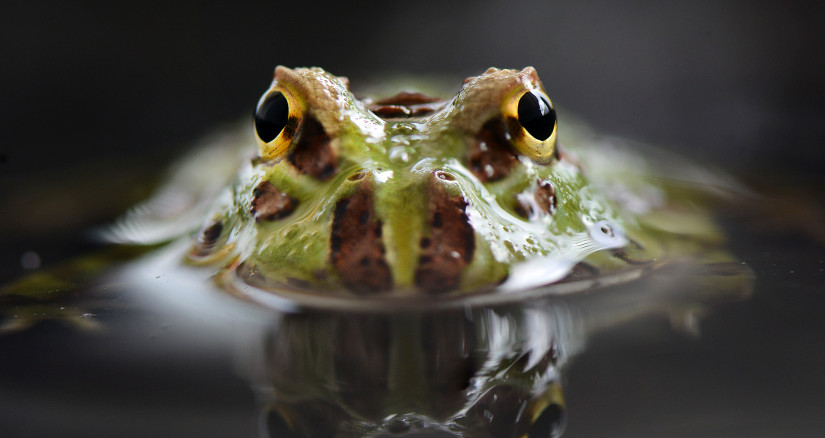
The famous “boiling frog” story tells us that a frog dropped into boiling water will immediately jump out, but a frog placed in cool water that is slowly heated will not recognize the danger until it is too late.
Interestingly, the story itself is not scientifically accurate.
Modern biologists generally agree that a real frog would sense the increasing temperature and attempt to escape. However, the metaphor has endured because it captures a very human tendency: We often fail to recognize important change when it happens gradually rather than suddenly.
Artificial intelligence (AI) may be today’s version of the boiling frog metaphor.

Photo by MegiasD
Most people did not wake up one morning and discover that AI had become transformative. Instead, it arrived in small, seemingly harmless increments. First, it helped write emails, then it summarized meetings, and then it generated images. Next, it analyzed data, drafted reports, reviewed contracts, built software, and assisted with research. Each improvement felt incremental. Collectively, they have fundamentally altered how knowledge work is performed.
The numbers tell the story. AI adoption across businesses has accelerated dramatically over the last several years, with organizations expanding AI use beyond isolated pilot projects into multiple business functions. According to McKinsey's 2025 State of AI survey, 88% of organizations now report regular AI use in at least one business function, up from 78% the previous year, while more than two-thirds are using AI across multiple functions. Although many organizations are still in the early stages of enterprise-wide scaling, AI has become an increasingly common part of everyday business operations.
Yet, AI is not actually a “boiling frog” situation in one important respect.
In the boiling frog metaphor, the danger is hidden and passive, whereas AI is highly visible. Every week, there are new product announcements, capabilities, and endless media coverage.
The issue is not that we cannot see AI advancing. The issue is that we often underestimate the cumulative effect of many small advances. Each new capability appears manageable on its own. The challenge comes when those capabilities begin to compound.
This distinction matters because AI should not be viewed solely as a threat. Unlike the boiling frog story, where the outcome is inevitable, organizations have choices. Companies can adopt AI thoughtfully, establish governance, train employees, and integrate the technology into their workflows. Research increasingly suggests that the organizations creating the most value are not necessarily those with the most advanced AI tools. They are the organizations that combine technology, data, expertise, governance, and adoption strategies into a coherent operating model.
So, where does this leave the pet food industry?
Many pet food companies are still evaluating AI primarily as an efficiency tool. They use it for meeting notes, marketing content, or basic data analysis. While these applications are useful, they represent only the first stage of adoption.
A smaller number of brands are beginning to realize a larger opportunity: applying AI to formulation optimization, ingredient intelligence, and actionable data management. Imagine identifying emerging ingredient trends months before competitors, or predicting manufacturing risks before they become costly deviations.

Photo by Lelia Milaya
This is where BSM Partners is uniquely positioned.
The future will not belong to organizations that simply have access to AI. Access is becoming universal. The future will belong to organizations that combine AI with deep domain expertise.
BSM Partners’ competitive advantage has never just been access to information; it has been the ability to interpret that information and turn it into actionable decisions for clients. Artificial Intelligence can accelerate data collection and analysis, but it cannot replace decades of expertise in pet nutrition, quality systems, product development, manufacturing, regulatory affairs, and commercialization.
In many ways, BSM Partners can become a translator between AI and the pet industry.
Clients do not need another chatbot. They need trusted advisors who understand how to apply emerging technology to real business challenges. BSM Partners can help companies pair AI efficiency with real forward movement, enabling leaders and innovators to make better decisions faster.
AI will never replace experts. But experts who learn to use AI to amplify their value will replace experts who do not.
The boiling frog metaphor reminds us that significant change often arrives gradually. Artificial intelligence is advancing one small step at a time. The organizations that recognize the cumulative impact of those steps today will be the ones defining the future tomorrow.
The water is warming. The question is not whether AI is coming. The question is whether we are paying attention.
Follow us on LinkedIn for the latest updates on all things happening here at BSM Partners.
About the Author
Bill Bouldin is a Product Innovation Manager at BSM Partners. He has experience in product development and quality in pet and human food. Bill enjoys woodworking in his spare time.
This content is the property of BSM Partners. Reproduction or retransmission or repurposing of any portion of this content is expressly prohibited without the approval of BSM Partners and is governed by the terms and conditions explained here.