New Spaces, New Stressors: Helping Pets Feel at Home After a Move
Some of us handle moving better than others, and the same goes for our pets. Some animals are natural adventurers accompanying their humans to wherever life takes them, while others prefer the comfort of home and don’t tend to deviate outside their claimed circle.
Take my cat, for example. She is a total homebody who had only ever known one home and was adamant about staying within her “territory.” But the truth is, I had to relocate, and she was coming with me.
This is just one example of how different species and temperaments might react to a move, from dogs that love car rides to birds that might loudly vocalize their unhappiness with the change. Understanding these differences can help you and your pet prepare for the transition and make it less stressful for everyone involved.
How Different Species React to Moving and Show Stress
Pets perceive environmental changes in different ways, and their reactions can range from mild confusion to highly stressed. Stress is a natural bodily response to a change or challenge; it can be expressed through various behavioral, emotional, and physical outlets. Stress responses are largely dependent on the animal’s initial temperament. Temperament refers to “the habitual inclination or mode of emotional response” one emits.
A change in environment is major, and often results in stress. Although it is natural, there are things we can do to help mitigate this stress for our pets, as stress can lead to serious health conditions if left unmanaged.
Moving is a stressor not only for your pet but also for you as their owner, watching them go through the change. You may be wondering how long it will take for your pet to adjust. The truth is, there isn’t a specific timeline to follow as every animal’s adjustment period is affected by external factors, like their past experiences. The most important thing you can do during times of change is to practice patience and consistently monitor your pet’s behavior.
Now, let’s look at some species-specific signs to watch for once you’ve relocated your pet.
Dogs
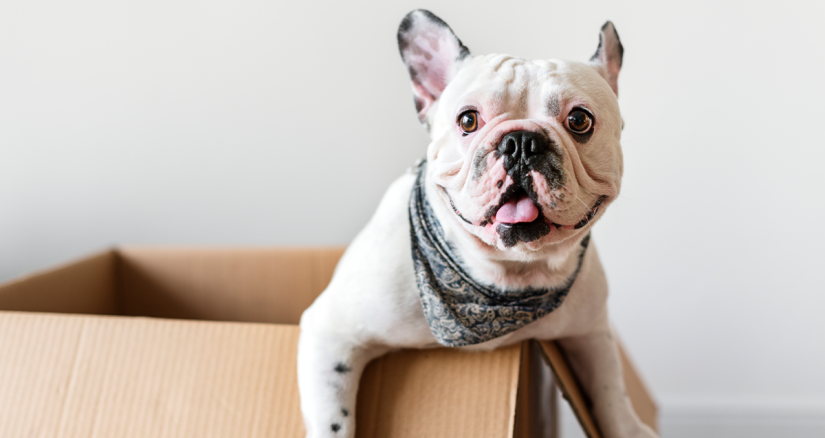
Although some dogs appear to adapt quickly in new environments, that is not always the case. Some dogs experience separation anxiety when moved into a new area and struggle adjusting. It’s important to maintain pre-move routines such as walks, feeding, and play sessions to help dogs adapt. Olfactory enrichment can help dogs too, such as exploring the new area before moving in to get them familiar.
Signs of discomfort include howling, barking, attempting to escape, and pacing. A dog may be indicating that it is stressed if it becomes unusually clingy or restless, following you constantly, panting without reason, abnormal aggression, or disruptive chewing. Positive signs to look for include exploring the new space calmly, eating and drinking on routine, and being able to rest without heavy panting or agitation.
If your dog is struggling, counterconditioning is a behavior modification technique that pairs a negative emotion with a positive experience to reduce distress. Try giving them a treat or a favorite toy before you leave. This can create a positive association with an unhappy circumstance and keeps the dog occupied while you are away. Studies show that environmental enrichment through human bonding, play with other dogs, and tug activities can also reduce stress and increase relaxation.
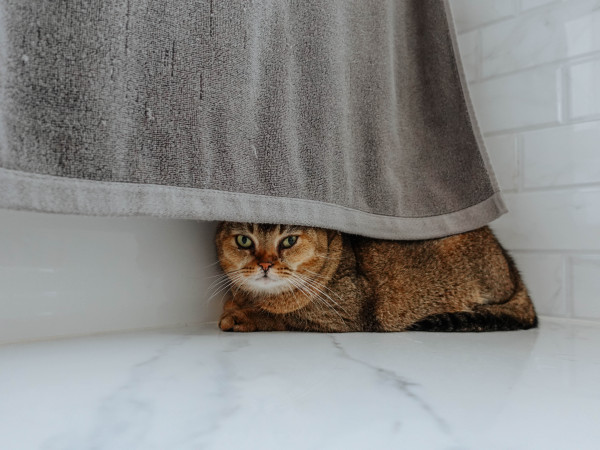
Photo by duangbj1
Cats
For cats, stress symptoms can be seen as a decrease in food intake, which can then cause further health issues such as weight loss, digestive upset, and other serious conditions. It is important to keep your cat’s food the same when relocating, as the move can put stress on their digestive system. Other concerning signs include not eating for more than 24 hours, urinating outside the litter box, sudden aggression, elimination problems, abnormal inactivity, and a lack of their normal self-grooming habits.
Cats rely heavily on olfactory cues, so transferring familiar scents such as used bedding or scratching posts can reduce cortisol spikes during relocation. The use of synthetic pheromones may also be helpful in reducing stress-induced behaviors.
Positive signs of adjustment include exploring, grooming regularly, and maintaining normal eating and litter box habits. Encourage your cat’s natural behaviors by offering elevated perches for observing their surroundings. Additionally, they should have a secluded space with their things to retreat as they acclimate to their new environment.
Birds
It is not always easy to tell if birds are unhappy in their new home, as they often hide distress until it becomes severe. Recognizing subtle signs is especially important after a move.
Common signs of stress include sudden changes in vocalization, excessive screeching, biting, feather plucking, self-mutilation, decreased appetite, repetitive pacing, hissing, heavy breathing, or beingunusually withdrawn. Environmental factors matter especially for birds. For example, a cage placed in a new location next to a window with new sights or even different wall colors can cause agitation for a pet bird. Negative signs of adjustment can include lack of appetite, fluffed feathers for long periods, feather loss, self-mutilation, or heavy respiration.
Birds’ immune and endocrine systems are highly sensitive to light cycles. Maintaining consistent day and night lighting and cage placement helps prevent immune suppression and feather disorders. Cover the cage at night to assist with routine and for optimal rest. Auditory familiarity, such as playing recordings of music or the radio, might also help your bird. You can encourage foraging enrichment by scattering food in different locations rather than placing it all in one dish with the cage. Positive signs of adjustment include singing, eating, exploring, and perching comfortably.
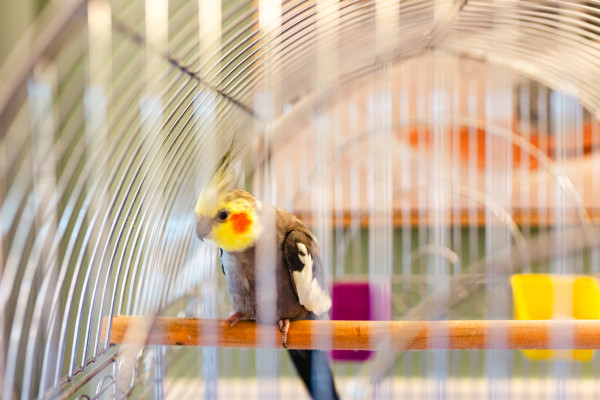
Photo by jennimareephoto
Reptiles and Amphibians
For reptiles or amphibians, the most important task is to replicate their environment as exactly as possible. These captive pets cannot escape undesirable conditions, so maintaining consistency is very important. Set up their enclosure with familiar decor and an identical layout while matching temperature, humidity, and lighting of previous and optimal conditions. Using the previous enclosure provides familiar scent cues to help them reorient.
Stress in reptiles and amphibians can be indicated by several behaviors, including decreased food consumption or anorexia, heightened aggression, or constant interaction with transparent barriers (ITB) such as repeatedly pushing against or digging under glass. Other signs include hypoactivity from too low of temperatures, pigmentation or skin changes, or open mouth breathing. Fear or stress responses may also appear as rapid movement within the enclosure, hyper alertness, body inflation, or hissing. Prolonged stress signs or refusal to eat for more than a few days, it’s important to consult a veterinarian that has experience with your specific reptile or amphibian.
When handled, an unusually tight grasp may indicate photostress from excessive lighting. Because reptiles and amphibians are ectothermic, meaning they rely on external sources to regulate their body temperature, any imbalance in temperature, humidity, or light can directly affect their digestion, immune function, and respiratory health.
If your pet is adjusting well, you’ll see calm exploratory behaviors, steady feeding, normal posture, and relaxed drinking and breathing patterns.
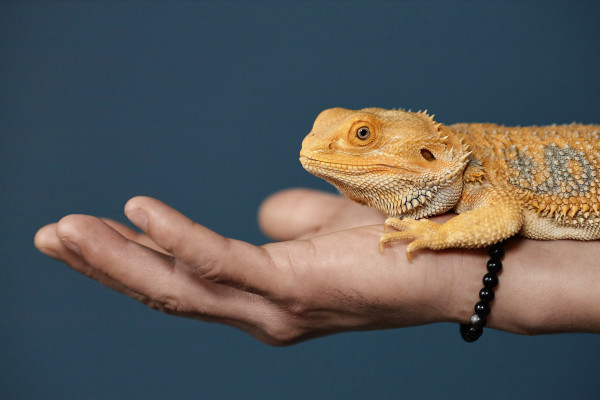
Photo by seventyfourimages
Pocket Pets
Pocket pets are small, sensitive animals that depend on consistency and familiarity to feel secure. Similar to other pets, subtle environmental changes can cause stress as they rely heavily on scent and routine to navigate their surroundings. Establishing a familiar setup and allowing exploration at their own pace can help ease the transition into a new home.
Rabbits
Because rabbits are a prey species, their stress responses can be intense. Ear position is one of the clearest signals. Flattened ears and a tense body indicate fear. If their nose twitching ceases, this can also signal distress. Rabbits are a highly territorial species which might cause expressions of defensive behaviors and confusion with their new area. Signs of stress may include nipping, growling, lunging, or even giving the “cold shoulder,” where the rabbit avoids contact or turns away.
If you have a group or pair of rabbits, they should always be moved together if possible, as separating them can increase stress. Allow natural behaviors such as sunbathing, digging, and hopping in small areasof the new space to ease transition. Handling should be gentle to avoid extra stress and restraint.
Positive signs that your rabbit is adjusting well are grooming, “binkying” or energetic jumps paired with sideways kicks, and calm but curious exploration.
Guinea Pigs
Just as important as it is with reptiles and amphibians, when relocating a guinea pig it’s important to keep their setup as identical to their previous environment as possible. Guinea pigs are extremely alert to change and can sense new people or animals nearby. Giving them time to visually explore their new environment from a secure spot helps them feel safe and begin adjusting naturally. Guinea pigs are also known to be highly neophobic, meaning they are fearful of new stimuli, which makes moving with them particularly difficult. Provide them with plenty of appropriate objects to gnaw on to keep them mentally enriched.
Concerning signs of stress are lack of appetite, changing their eating habits, reluctant to move, chewing on their cages, or hiding most of the time. They may stop eating entirely if overwhelmed, in which case a veterinarian should be consulted. Positive signs are grooming, wheeking, or high-pitched squeaking sounds, low pitched purrs, and exploring.
Ferrets
Ferrets are curious and social animals and should be given supervised opportunities to explore their new home. Ferrets have sensitive respiratory tracts, so their enclosures should have good ventilation with minimal dust. Because of their rapid gut transit time and simple digestive system, they are prone to stress-related gastrointestinal upsets making the stress of moving a high risk for illness.
Stress in ferrets can be observed primarily through a change in stool consistency, particularly diarrhea. Maintaining their normal sleep cycle of 18 to 20 hours a day will help support digestive and immune health. Concerning signs include persistent hiding, hissing, screaming, biting, or refusing food. If your ferret seems to be struggling, consult your veterinarian.
Environmental enrichment and scent continuity, such as familiar bedding, used litter, or worn clothing, can help reduce stress. Positive signs your ferret is transitioning well to its new environment include rolling, “dooking” or soft chirping or clucking sounds, tail wagging, pawing, and tunneling.
Conclusion
Relocating is a significant physical and emotional change for pets. Recognizing species-specific reactions and stress signals allows you to provide consistency and comfort making the transition less overwhelming. Maintaining familiar routines and keeping their belongings consistent can help make the transition smoother.
If concerning behaviors arise, contact your veterinarian promptly and consider a post-move checkup to ensure overall wellness. With patience, observation, and empathy, your pets will begin feeling confident and secure in their new area. Moving is a big adventure for both of you, and even my cat has already found her new favorite window spot.
To learn more about relocating with pets, read the first part of this two-part series, which covers the logistics of traveling and moving with our furry, scaled, finned, and feathered friends.
Follow us on LinkedIn for the latest updates on all things happening here at BSM Partners.
About the Author
Anna Guilfoyle is a Product Innovation Analyst at BSM Partners. She earned her bachelor's degree in Animal Science with a minor in Pet Food Science from Kansas State University. During her undergraduate studies, Anna supported research in animal welfare and completed coursework in food safety, product development, and pet food processing. She also holds a PCQI certification in human food production.
She has internship experience in companion animal nutrition including formulation and production support across various product types. Anna enjoys blending creativity with science to support innovation within the industry. She is passionate about improving the well-being of animals and has cared for a wide range of species from companion animals to production animals.
This content is the property of BSM Partners. Reproduction or retransmission or repurposing of any portion of this content is expressly prohibited without the approval of BSM Partners and is governed by the terms and conditions explained here.