Foster to Forever: Consumer Data, Volunteer Math, and Why Every Goodbye is Worth It
Editor's Note: This is the second article in a two-part series. Part 1 covered the shelter crisis, foundational research, and the impact of home sounds on shelter dogs. Here, we explore how fostering transforms dog behavior, what consumers get wrong—and right—about the process, and why the goodbye is the whole point.
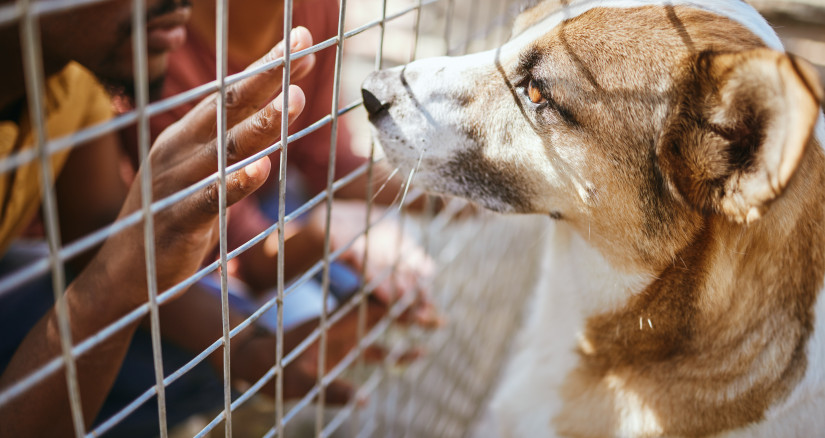
When dogs leave shelters for foster homes, cortisol levels decrease significantly, and rest increases—a critical indicator of psychological safety. Studies using urinary cortisol: creatinine analysis documented this measurable physiological shift even after short-term fostering stays. When a dog can finally sleep deeply, consistently, without constant alertness to unpredictable sounds, its nervous system begins to recalibrate.
From that recalibrated place, real learning becomes possible.
Research from the scoping review on companion animal fostering confirms that fostered dogs "form secure attachments to their caregivers at similar rates to owned dogs." Secure attachment is the foundation of trainability. A dog that trusts you can learn from you. A chronically stressed dog cannot.
In a foster home, we can work on house training—not from scratch, exactly, but from the beginning, with an understanding that the house has rules. We can introduce crate comfort. We can counter-condition a dog's fear of the vacuum cleaner, the UPS driver, the ceiling fan, and the smoke alarm. We can assess how the dog responds to children, to other pets, and to different types of people. We can understand whether the dog is food- or play-motivated, a cuddler or an independent spirit, and needs one walk or three to settle.
All of that intelligence goes to the adopter, and it changes the outcome of the adoption.

Photo by africaimages
What Consumers Think, and What They Get Wrong
The data on consumer attitudes toward fostering and shelter adoption reveal a complicated picture that anyone in the pet industry should pay close attention to.
The 2024 Hill's Pet Nutrition State of Shelter Pet Adoption Report, one of the most comprehensive annual surveys in the space covering 2,500 current and prospective pet owners, found that 66% of Americans are open to adopting a shelter pet when they are ready for a pet. That's a strong positive signal.
But when it comes to fostering, the picture is murkier:
- 47% of prospective fosters are afraid they will become too attached and end up adopting (something called a "foster fail"), and this fear prevents them from starting. This is up 7% from the previous year.
- 64% say they would foster if pet care costs were covered—a major misconception, since most shelters cover all expenses.
- The share of Americans actively fostering declined from 14% in 2024 to 11% in 2025, even as shelter populations grew.
Here is what I want to say to the 47%: I understand you. I have felt every one of those goodbyes. I am not going to pretend it is easy to hand a dog you love to its new family. About 78% of foster caregivers report experiencing grief when a foster pet is adopted. But here is what that grief also means: You did the work. You built something real with that animal. And you gave it to someone else's family, with all the knowledge you gained, so the adoption would hold.
That is not a failure. That is the whole point.
As for cost, most shelters and rescue organizations provide food, veterinary care, supplies, and support. The primary investment a foster makes is time, consistency, and emotional presence (which is also, not coincidentally, exactly what the dog needs most).
What Consumers Want from a Fostered Dog, and What They Get
The same research also tells us something important about what prospective adopters value: They want behavioral information they can trust.
According to the 2024 Hill's State of Shelter Pet Adoption Report, respondents cited personality, behavior, and health as the most important considerations when adopting. They also rated post-adoption behavioral support as more influential on their decision to adopt than any pre-adoption service (34% versus 30%), and behavioral issues were the top cause of adoption anxiety among new adopters (46%).
For a dog adopted from a shelter with no foster history, the answer to "what is this dog like at home?" is genuinely unknown. The shelter can share what it observes in the kennel, but these behaviors, as we've established, are often heavily distorted by stress.
For a dog who came through foster care, the answer is rich, specific, and accurate: "He sleeps through the night. He's nervous around cyclists but improves with a treat. He does great with cats. He needs the TV on when he's alone, or he paces. He figured out the stairs in three days. He housetrains fast—one accident the whole first week."
That information is what makes adoptions stick. Research shows that caregiver-directed adoptions result in lower return rates than direct adoptions from shelters. The adopter walks out knowing what they're getting into. The match is better. The relationship holds.
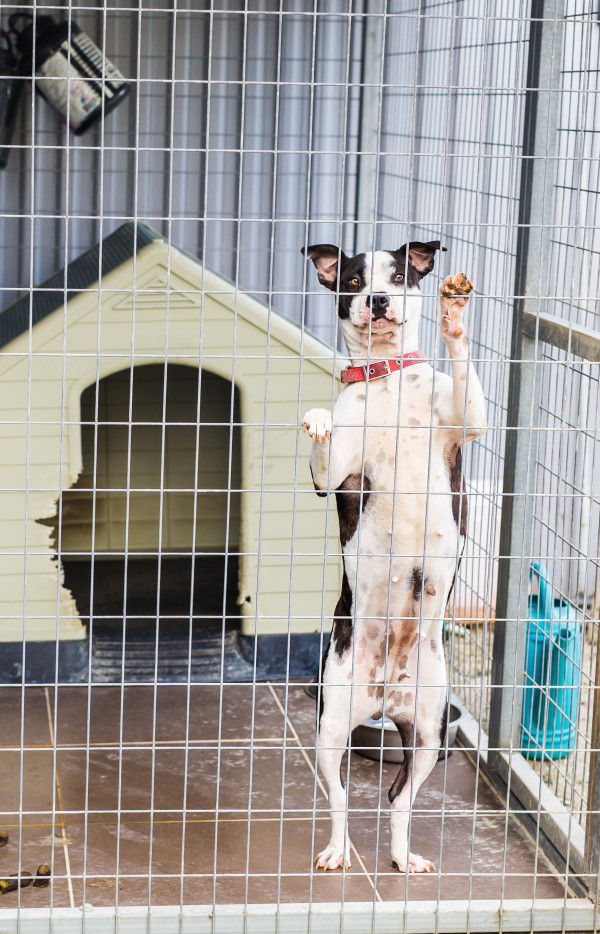
Photo by Satura
The Volunteer Value Equation
From a pet industry and consumer research perspective, foster caregivers represent something extraordinary: a volunteer base providing a service that shelters genuinely cannot replicate at scale.
The scoping review published in 2024 describes animal fostering as "a form of high-stakes volunteerism"—not a casual or passive contribution, but an active, skilled, emotionally engaged form of care with documented welfare and outcome benefits. The 2023 Association for Animal Welfare Advancement (AAWA) industry report identified a lack of foster support as one of the top three barriers to shelters' ability to manage their populations.
What fosters provide cannot be purchased:
- Individualized behavioral assessment in a real home environment
- House training and basic socialization that dramatically improve adoptability
- Sound and stimulus desensitization that calms and opens a dog's nervous system
- Accurate adopter matching information that reduces post-adoption returns
- An emotional connection that gives a dog its first experience of belonging
The industry talks constantly about what consumers want from the brands and companies that serve pets. We should be talking at least as much about the volunteer infrastructure that makes it possible for those pets to reach homes at all.
What I've Learned That No Study Can Fully Capture
After forty-plus dogs in three years, some patterns repeat themselves so reliably they feel like laws of nature.
- Every hunting dog I have fostered has been house-trained within two weeks. Not because I have a gift for it, but because these are not stupid animals; they are simply animals that have never been taught the rules. Give them the rules consistently, with patience and positive reinforcement, and they adapt with remarkable speed.
- The sounds of a home become By the end of most of my fosters' stays, the refrigerator hum, the TV, the sound of doors closing, the smell of coffee brewing—these things that once startled now seem to provide reassurance. Routine becomes a form of security that a shelter kennel simply cannot offer.
- What looks like aggression in a shelter is usually fear. I have taken in dogs flagged as "too reactive" or "difficult" who, within 72 hours of being in a calm, consistent home, settled into gentle, affectionate animals. The kennel was revealing their worst possible selves. The home revealed who they actually were.
- Fosters are recruiters. Every person who meets one of my foster dogs and witnesses the transformation is more likely to adopt, foster, and believe in shelter animals. The dog is the best ambassador for the system.
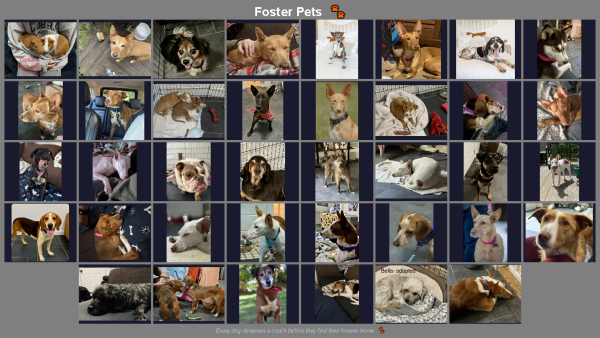
Photo courtesy of Lee Ann Hagerty
If You're Reading This and You're on the Fence
You don't need a perfect house. You don't need other dogs. You don't need a yard (though one helps). You need patience, a consistent schedule, a willingness to say goodbye, and the understanding that the goodbye is not a loss—it is the whole point.
The research is unambiguous: fostering a dog makes it 14 times more likely to find a home. That is a number worth sitting with. One foster. Fourteen times more likely. The math on what we collectively could accomplish is staggering.
Shelters need you. The dogs need you. And I will tell you from personal experience: it changes you in the best way possible. You learn what dogs are really made of. You learn how fast trust can form once fear recedes. You learn that every dog—even the ones that arrive most broken—has something extraordinary waiting just beneath the surface.
You just have to give them a couch to sleep on while they find it.
If you are involved in shelter operations, rescue coordination, or pet industry strategy and want to discuss fostering programs, consumer adoption barriers, or the data behind what makes placements stick, reach out. This is a conversation worth having.
Follow us on LinkedIn for the latest updates on all things happening here at BSM Partners.
About the Author
Lee Ann Hagerty is Director of Customer Enrichment and Consumer Insights on the BSM Product Innovation team with 29+ years in the pet food industry, working for Iams/Eukanuba, Procter & Gamble, and Mars Pet Care. She brings a unique combination of project management skills with consumer insights, product design, animal nutrition, and sensory science which drives an in-depth understanding of the pet and consumer. Lee Ann has a passion for helping dogs. Over the last year and a half, she has fostered over 22 dogs. Many of them were senior dogs who had lived their entire lives outside as hunting dogs. She has been a foster pet parent for many years, and it brings her great joy to see these pets find fur-ever homes where they live with families indoors with love and care.
This content is the property of BSM Partners. Reproduction or retransmission or repurposing of any portion of this content is expressly prohibited without the approval of BSM Partners and is governed by the terms and conditions explained here.