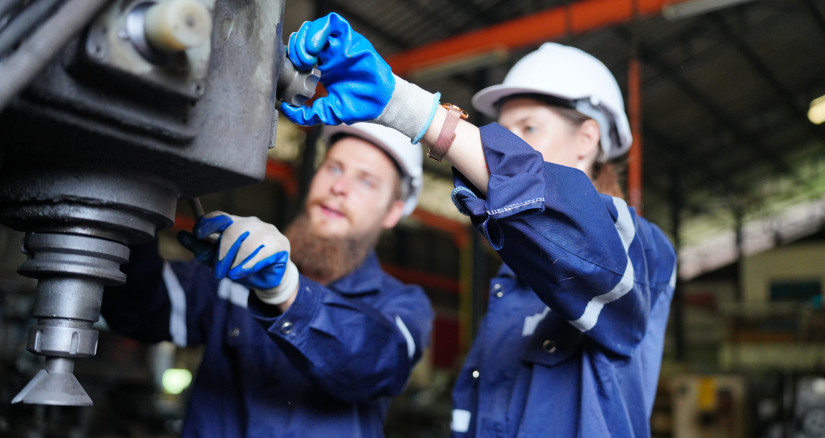
Murphy Loves Reactive Maintenance
Imagine you just got off work. You changed the oil in your car, replaced the air filter, checked the tires to see if they needed rotating, got cleaned up, and went in to grab some supper. As you sit down to eat, you get a phone call. As Murphy’s Law will have it, a critical machine just broke down and now you are heading back into the plant.
When you get in, you find a completely dead, worn-out machine with multiple part failures. Now the scramble is on to get parts hotshot into the machine to get it up and running again. In the meantime, the plant is down, loads are being missed, product is spoiling, and you are watching people being paid to sit in the break room. The meter is running. As you dig into the cause of the downtime, you find that a loose bolt came out, causing all the issues—something that could have been caught during a routine preventive maintenance check.
There are many differences between reactive and predictive maintenance.
At first glance, reactive maintenance may seem efficient. Why spend money and time stopping a piece of equipment and thoroughly checking it out after a certain time period to ensure there won’t be a failure? Here’s the catch: machines don’t send calendar invites for their failure. They tend to break right before a critical shipment deadline, on a weekend, or in the middle of the night when no parts are available.
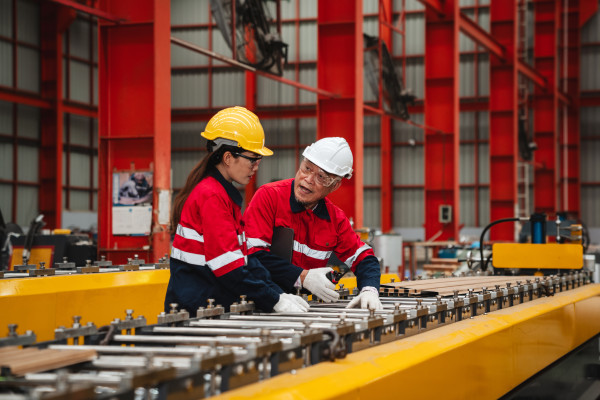
Photo by NewJadsada
The Costs of Unplanned Downtime
In the U.S., unplanned downtime costs an average of $10,000 to $50,000 per hour. This is largely based on what is being produced and the company's size. For instance, if a company experiences between 50and 200 hours of unplanned downtime per year, it is a revenue loss between $50,000 and $10,000,000. Unplanned downtime is estimated to cost manufacturers upwards of $50 billion annually.
The key drivers of this high price tag are the direct costs and indirect costs.
- Direct costs are the expenses that can be clearly tied to the production of a specific product. These include ingredients, packaging materials, and labor directly involved with the manufacturing process.
- Indirect costs are expenses that support production but cannot be directly tied to a specific product. These include salaries for utilities, quality control, management, and support staff, as well as product disposal and the cost of recalls.
When using these estimates, you must adjust for your specific conditions. Important factors include:
- Product value and margin: Perishable, high-margin foods make downtime more costly.
- Line criticality and bottlenecks: If one machine is the bottleneck for the entire line, its downtime cascades to affect other processes in the plant.
- Spoilage and waste: In food processing, products that were mid-process when downtime occurred may have to be discarded.
- Restart costs: Cleaning, quality checks, and calibration after a shutdown add indirect costs.
- Penalties and contractual obligations: Failure to deliver may result in fines, lost contracts, or customer dissatisfaction.
- Idle labor and overhead: Workers may be paid while machines are idle.
- Repair premium: Emergency repair parts and expedited services cost more.
- Reputation and customer loss: Hardest to quantify, but real over time.
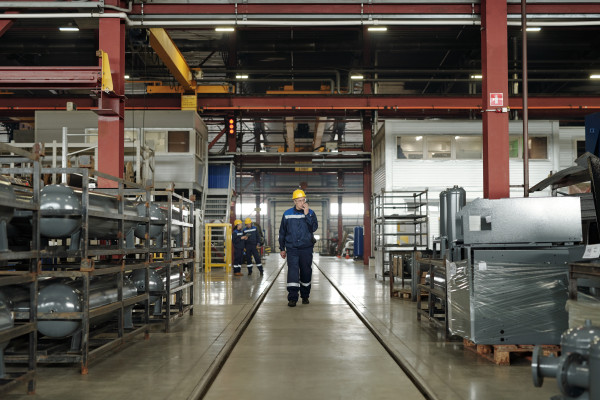
Photo by Pressmaster
Why Preventive Maintenance is Critical
In addition to reducing unplanned downtime, which is extremely critical, there are several other reasons to prioritize a preventive maintenance program.
- Extends equipment lifespan: The majority of equipment purchased are significant capital investments. Regular maintenance such as lubrication, calibration, and part replacement keeps machines operating within optimal parameters. This minimizes stress on components and extends the equipment's overall service life.
- Improves safety and compliance: The last thing anyone wants is a product contaminated with a foreign object. Worn or malfunctioning machines pose safety risks to operators and can lead to regulatory non-compliance. Preventive maintenance ensures that all equipment meets safety standards and operates safely, protecting both employees and the company.
- Enhances product quality: Equipment that runs smoothly produces more consistent, higher-quality output. Preventive maintenance helps maintain precise tolerances and reduces defects, rework, and waste.
- Reduces long-term costs: While preventive maintenance requires regular investment, it prevents expensive emergency repairs and equipment replacements. It also minimizes losses from unplanned downtime, scrap material, and delayed production.
- Optimizes operational efficiency: Routine inspections and adjustments help machines operate at peak efficiency, improving throughput, energy use, and productivity across the production line.
- Enables better planning and resource allocation: Scheduled maintenance enables manufacturers to proactively plan staffing, spare parts, and maintenance activities rather than react to breakdowns. This creates a more predictable and efficient operation.
- Increases overall morale: There is nothing worse than working on worn-out equipment that constantly breaks down and causes line stoppages. It often turns into a production operator vs maintenance technician war, with each side accusing the other of not knowing how to do their jobs.
Plants often cut the maintenance budget first because maintenance is viewed as a cost center rather than a revenue driver. Unlike production or sales, its benefits, such as preventing downtime or extending equipment life, are not immediately visible on a financial statement. In times of budget pressure, leadership may prioritize short-term savings over long-term reliability, assuming equipment can “run a little longer” without intervention. However, these cuts often backfire, leading to increased breakdowns, higher repair costs, safety risks, and lost productivity—costs that far exceed the initial savings from reducing maintenance spending.
Preventive maintenance is critical in a food manufacturing plant because it helps ensure consistent product quality, operational efficiency, and food safety. By routinely inspecting, cleaning, and servicing equipment before problems arise, plants can minimize unplanned downtime, extend equipment lifespan, and reduce costly emergency repairs. Preventive maintenance also supports compliance with regulatory standards, decreases contamination risk, and protects production schedules, ultimately safeguarding both profitability and brand reputation.
Murphy’s Law, “Anything that can go wrong, will go wrong,” is often true of the modern manufacturing environment, but it doesn’t have to be. By partnering with expert engineers like those in BSM Partners’ Engineering & Manufacturing Operations practice, food processors can rest easy knowing their equipment won’t fail them when they most need it.
Footnote: During the 1940’s an Aerospace Engineer Named Edward Murphy said about one of his colleagues when some incorrectly wired sensors were found, “If there is a way to do it wrong, he’ll find it.” It has morphed over time to: “Anything that can go wrong will go wrong.” Murphy was trying to point out that mistakes were not inevitable, and engineers must find and fix all errors through preparedness to prevent accidents.
Follow us on LinkedIn for the latest updates on all things happening here at BSM Partners.
About the Author
Doug Cleary is the Director of Innovation Engineering for BSM Partners. Doug has over 30 years of experience in plant maintenance, process engineering and controls, and project management in various industries, including food processing, resin manufacturing, and the themed park industry.
This content is the property of BSM Partners. Reproduction or retransmission or repurposing of any portion of this content is expressly prohibited without the approval of BSM Partners and is governed by the terms and conditions explained here.