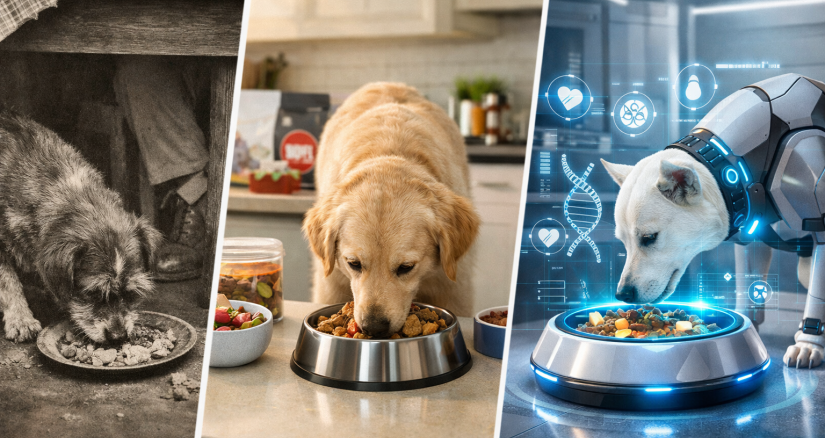
From Table Scraps to AI Snacks: What Your Dog Will Be Eating in 2125
One hundred years ago, the pet food industry barely existed. Dogs ate table scraps, cats hunted or scavenged, and the idea of complete-and-balanced nutrition was still decades away. As outlined in my previous article, “The History of Pet Food: A Journey Through Time,” the transformation from scraps to scientifically formulated diets has been driven by industrialization, advances in nutrition science, and the steady strengthening of the human animal bond.
Today, pet food is a global, science-driven category shaped by research, ingredient innovation, safety systems, and increasingly human values.
So, what happens one hundred years from now?
Looking that far ahead forces us to move beyond flavors, formats, and packaging trends and instead consider the deeper forces shaping how people care for animals. The future of pet food will not simply be about what goes into the bowl. It will be about how food fits into a broader system of health, technology, sustainability, and human-animal relationships.
Nutrition Will Become Hyper-Personalized
In a century, the concept of one-size-fits-all pet food may feel archaic. Advances in genetics, biomarkers, and real-time health monitoring could enable diets tailored to each individual animal. A dog’s food might adjust automatically based on age, activity, microbiome signals, disease risk, and environmental stressors.
Rather than switching bags at life stages, nutrition will evolve continuously. Pet food may be formulated and delivered dynamically, with nutrient profiles recalculated daily or weekly based on data from wearables, smart bowls, and veterinary health platforms.
In other words, food will become part of a closed feedback loop rather than a static product.
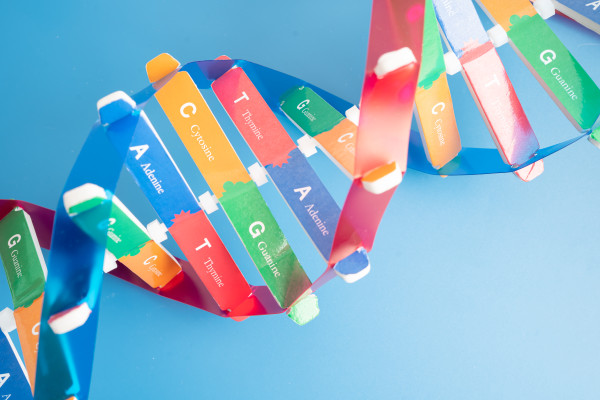
Photo by chormail
Protein Will Be Redefined
The definition of protein will look very different in one hundred years. Traditional animal-based proteins may account for only a small share of formulations, driven by environmental constraints and efficiency pressures.
Cell-cultivated proteins, precision-fermented amino acids, insect-based systems, and novel microbial biomass will likely dominate. These ingredients will not be positioned as alternatives, but as engineered solutions optimized for digestibility, consistency, and nutrient control.
The future pet food industry will care less about where protein comes from and more about how precisely it meets biological requirements.
Manufacturing Will Shift from Mass Production to Distributed Systems
Today’s large, centralized manufacturing plants may give way to smaller, highly automated regional or even local production hubs. These facilities could produce food on demand, reducing storage, transportation, and waste.
Some pet owners may subscribe to nutrition platforms rather than brands. Food could be produced closer to the point of consumption, digitally customized, and delivered fresh or shelf-stable, depending on demand.
Quality assurance will rely less on end-product testing and more on predictive controls, real-time sensors, and validated process intelligence.
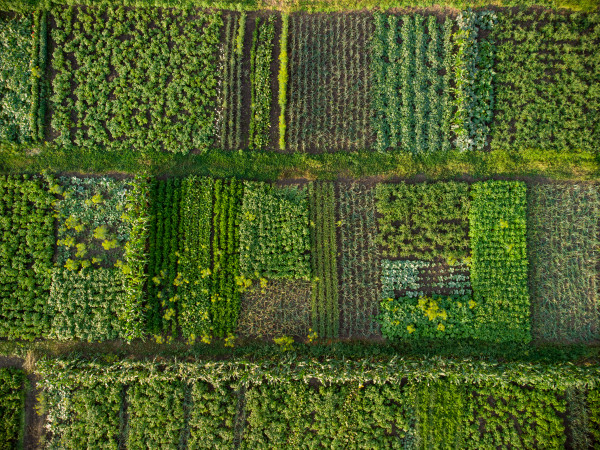
Photo by Sandsun
Sustainability Will Be Assumed, Not Marketed
In the future, sustainability will not be a differentiator, but a baseline expectation.
Water use, carbon impact, biodiversity, and circularity will be embedded into regulatory frameworks and purchasing decisions. Ingredients and processes that cannot demonstrate long-term ecological compatibility
Pet food companies will be judged not only on nutrition and safety, but on how well they coexist with planetary limits.
The Human-Animal Bond Will Continue to Evolve
As described in the historical progression of pet feeding practices, the evolution of pet food has always mirrored how humans view animals. That dynamic will only intensify as time goes on.
As pets increasingly serve as companions, family members, and therapeutic partners, expectations for care will rise. Food will be viewed as a preventive health tool rather than a commodity. The line between nutrition, medicine, and wellness will blur. Diets may be prescribed, adjusted, and monitored much like human medical nutrition is today.
In this future, trust will matter more than branding. Transparency, scientific credibility, and ethical decision-making will define successful companies.
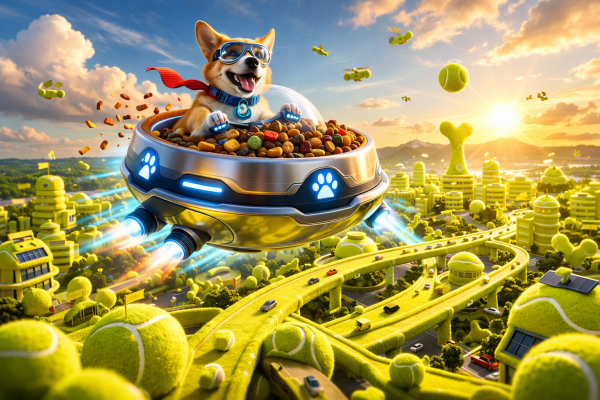
Image created by Jordan Tyler using OpenAI
A Worst-Case Glimpse of the Future
Of course, not every future scenario is so aspirational.
In a less optimistic world, economic instability, climate disruption, and regulatory pressure could reshape pet food in ways few would welcome. Ingredient shortages might lead to highly synthetic, ultra-processed rations designed primarily for cost efficiency rather than optimal health. Supply chain fragility could reduce diversity in protein sources, concentrating production into a handful of global systems.
And growing human populations could put so much pressure on the animal protein supply that many of these ingredients could be pushed out of the pet food chain.
Technology could also overshoot. Hyper-personalization might become hyper-surveillance, with pet health data monetized more aggressively than pet health protected. Algorithms could dictate feeding regimens with little room for professional judgment or common sense.
In the most extreme case, sustainability pressures could narrow formulation options to the point that choice disappears altogether. Pet owners might not select diets based on preference, but simply accept what is permitted or available.
These scenarios may sound exaggerated, but history shows that industries evolve not only through innovation but also through constraints.
What This Means Today
Thinking one hundred years ahead is not about predicting specific ingredients or devices. It is about recognizing the trajectory.
The history of pet food shows steady movement toward greater science, greater convenience, and greater emotional investment. The next century will likely accelerate those forces. The question is whether the industry steers that acceleration responsibly.
The pet food industry is moving toward greater precision, deeper accountability, and tighter integration with health systems. Companies that invest today in science, resilience, and long-term adaptability will be the ones shaping the future rather than reacting to it.
The future of pet food will not arrive all at once. But its foundations are already being built, and the decisions made now will echo for the next century. Our deep connection to industry trends and conversations makes us the perfect partner with which to build the future of pet food.
Follow us on LinkedIn for the latest updates on all things happening here at BSM Partners.
About the Author
Bill Bouldin is a Product Innovation Manager at BSM Partners. He has experience in product development and quality in pet and human food. Bill enjoys woodworking in his spare time.
This content is the property of BSM Partners. Reproduction or retransmission or repurposing of any portion of this content is expressly prohibited without the approval of BSM Partners and is governed by the terms and conditions explained here.