
Did TikTok Solve the Internet’s AI Slop Problem?
In a time when artificial intelligence is facilitating our dinner orders, partnering with grocery chains, and even making mainstream holiday commercials, it doesn’t feel like any kind of AI regulation is coming anytime soon. Social media feeds are increasingly flooded with AI-generated content, from fake influencer posts and product reviews to completely fabricated viral videos. This “AI slop” problem has left users with frustration and more than a few trust issues. However, TikTok is rolling out its own solution that might just answer social media’s AI problem.
TikTok isn’t the first social media platform to address the concerning amount of AI content on its site. Still, Meta’s AI muting feature leaves much to be desired, and Google is mainly focused on AI content detection for now. In the meantime, TikTok is testing a new feature that lets users use a slider in the app’s settings to control how much AI-generated content they see. This is by far the most robust approach to AI content regulation yet, but TikTok isn’t stopping there. The platform is also working on detecting AI content with “invisible watermarks,” and has announced that it is donating $2 million to organizations like Girls Who Code to improve AI literacy. These are some big steps towards helping people escape the AI craze if they so choose, but it does leave me with a few questions.
What Does This Mean?
Since this feature is still in development, there isn’t a lot of information to go off yet. This news brought up some interesting questions for me, though. How will this implementation fit into TikTok’s existing algorithm? How will this update affect small creators on the app? Is TikTok going to promote more human content and demote AI content, or just give less credence to AI content? The only thing I can say for sure is that if TikTok gives this the appropriate amount of time and resources, this is a fantastic move.
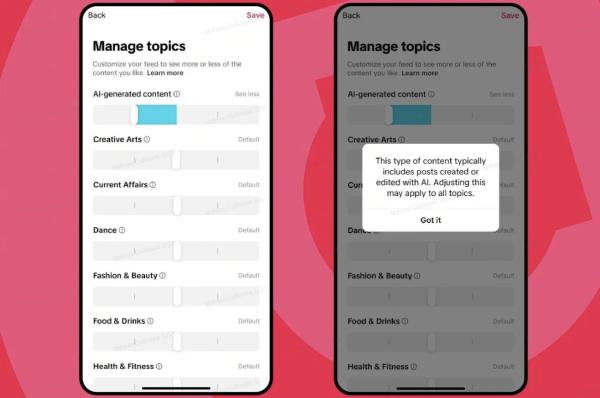
Image courtesy of TikTok
Why This is a Good Play
Even though the other social media apps are starting to come out with their own policies and infrastructure to deal with the sudden influx of AI-generated content, TikTok’s AI slider is unique for a couplereasons.
Keeping the Customer Happy
First and foremost, this is a great way for TikTok to keep their target audience happy. The app is huge with Gen Z, which is known for being more skeptical of AI than other generations. Giving users a feature to control the amount of AI-generated content they see on their page puts so much more control into their hands, which can’t be said for the other social media sites.
Updating Existing Features
This new AI slider also has the potential to bring more attention to some of TikTok’s existing features. The app already has sliders for users to choose the kind of content they’d prefer to see, but it isn’t a very well-known setting. Adding a slider for AI-generated content could draw more users to utilize the other content sliders in the app’s settings, giving new life to a previously underused feature.
Boosting Small Content Creators
There isn’t much information out there yet on how exactly TikTok’s AI content slider will affect the algorithm, but it’s possible that while the app begins showing less AI-generated content, it starts boosting original content from smaller creators. Of course, the big influencers will still get their share of screen time, but TikTok doing more to promote content from small content creators on the app gives users more incentive to post their own videos, which in turn will boost the app’s success.

Photo by Elisall
Final Thoughts
So much is up in the air surrounding this new TikTok feature, but it could mean big things for small content creators and for consumers who aren’t interested in seeing AI-generated content 24/7. Even if it isn’t a complete solution to the AI problem on social media, this is the closest thing that a company has offered that gives users real control over what they want to see. This is different from AI content filters on other social media apps, so it’s a little unclear how this feature will be received. If it’s successful, however, other brands could follow suit, and the social media landscape could look very different in the future.
Don’t get lost in the confusion—follow BSM Partners on LinkedIn and Facebook and Barking Mad on TikTok and Instagram to stay up to date with the latest social media and AI trends.
Follow us on LinkedIn for the latest updates on all things happening here at BSM Partners.
About the Author
Cady Wolf is an Analyst at BSM Partners. She graduated magna cum laude with a degree in English from Brigham Young University-Idaho, and she currently lives in Rexburg, Idaho with her husband, their two cats, and pet tortoise. She loves animals and learning about how to help pet brands and pet parents alike.
This content is the property of BSM Partners. Reproduction or retransmission or repurposing of any portion of this content is expressly prohibited without the approval of BSM Partners and is governed by the terms and conditions explained here.