All Bark, No Bite? What We Saw at Global Pet Expo 2026
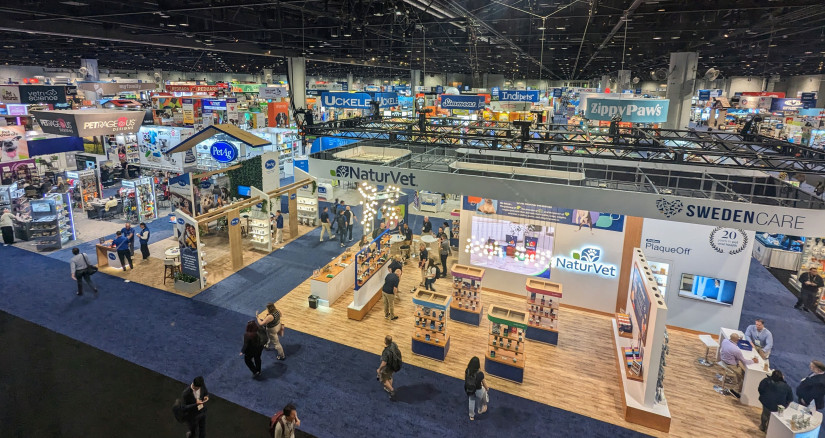
Global Pet Expo 2026 took Orlando by storm last week, and after three busy days on and off the show floor, attendees had a mixed bag of experiences. While some exhibitors felt like they saw record-setting success, others admitted traffic was slower than in years past.
This, however, isn’t a reflection of the American pet industry’s continued growth and success. If anything, the market is more mature than ever.
By the Numbers
According to the American Pet Products Association (APPA), which co-hosts Global Pet Expo each spring alongside the Pet Industry Distributors Association (PIDA), this year’s show welcomed 20,000 attendees, including 1,000+ exhibitors across more than 3,300 booths.
New to the show this year was the Global Petfluence Studio, an area on the show floor designed to provide a space for content creators, marketers, media members, and advertisers to film, connect, and show off their stuff. We can expect this to stick, as the number of people looking to capitalize on pet care commentary and social influence (and the resulting brand sponsorships, of course) continues to grow.
The APPA also shared its latest pet industry data at the show, placing total pet revenue in the United States at $158 billion in 2025, up roughly 3.7% over 2024. The firm expects pet industry sales to reach $165 billion by the end of 2026. This would reflect a 4.4% year-over-year growth rate, but inflation is expected to make up 2% of that growth. Remember: pet food prices remain nearly 21% higher than in January 2022.
With an estimated 95 million households owning pets across America, the market will continue to thrive despite rising prices and economic pressures. The real questions are: Where is the innovation, and is it truly innovative?
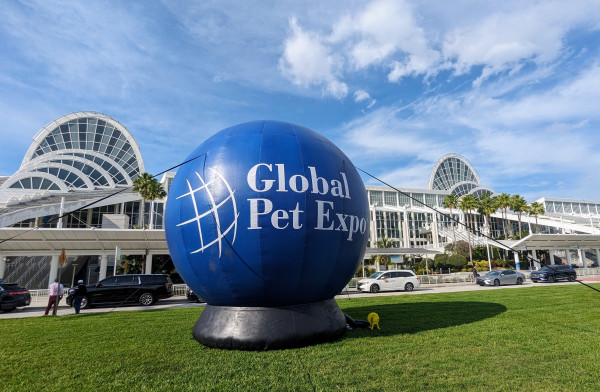
Photo by Jordan Tyler
Not in Nutrition
Fifteen years ago, pet nutrition was a different ballgame. Novel formats like freeze-dried, sous vide, fresh, and even raw were less developed, less commercialized, and therefore, fewer pet parents knew they existed or understood where they fit into the pet food landscape. Kibble and wet diets were the industry’s holy grail, and while kibble remains the top-selling pet food format in the United States today, human food trends have changed this landscape for good.
To make a long story short, the American pet industry is saturated, so much so that true innovation in the nutrition sector is few and far between.
At Global Pet Expo 2026, the lack of innovation wasn’t for lack of trying. Supplement brands, new and old, bombarded the New Product Showcase, carrying claims around gut health, allergy relief, hydration, and calming support. These products are not new in claim or in format, but they do speak to the continued proliferation of the pet supplement space.
In the ingredient category, collagen, superfoods, and dairy-based treats made from yogurt or goat’s milk remain on-trend as pet owners prioritize functional health benefits and preventive support. But really, nothing new to see here.
Ultra-humanized pet products also ran rampant, from Puppy Popcorn you can pop in the microwave to Wiggle Whip, a freeze-dried doggy ice cream made from goat’s milk. I’ll be the first to admit, the cat toys shaped like wine bottles were calling my name. As long as we treat companion animals like furry family members, we can expect to see more and more pet-friendly takes on human treats.
At this point, one could argue that the pet nutrition marketplace has become oversaturated, leading to more imitation than true innovation. However, while pet food may have peaked, other care categories are on the rise, particularly lifestyle and enrichment products.
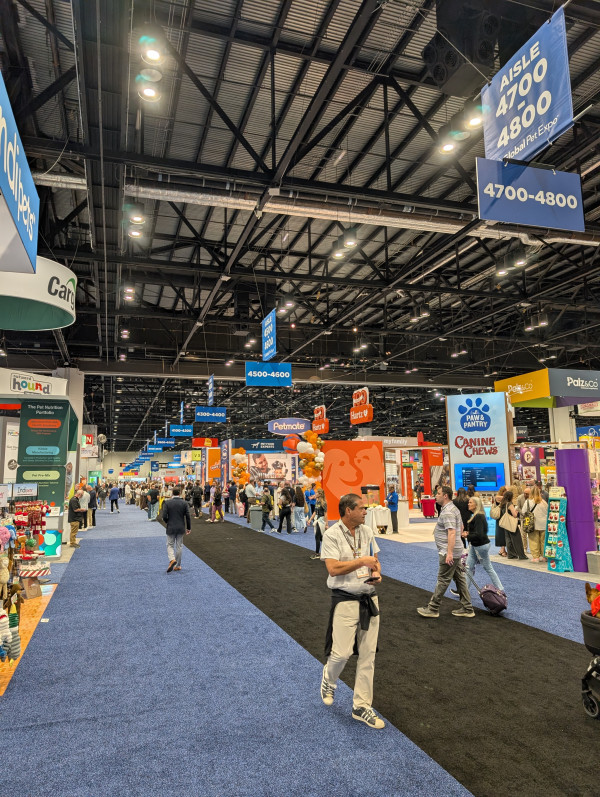
Photo by Jordan Tyler
The Lifestyle Leap
With a lack of innovation to parse in the nutrition segment, I turned my attention elsewhere: lifestyle products, enrichment and engagement, and products that aim to make the administrative aspect of pet ownership more seamless.
In the lifestyle category, the New Product Showcase—which featured more than 1,000 new products across several species and categories—was packed with durable goods that speak to pet owners’ personal style. After all, aren’t our pets an extension of ourselves?
Think: utility bags for dog park days that look and feel like luxury; collars and leashes that style themselves; dog beds and cat trees that don’t interfere with the feng shui of your living room; litter boxes you don’t need to hide because they trap odor so effectively and look good doing it. These are all quirky takes on products that aren’t new by any means, but have certainly evolved alongside the market—and more so, along pet owners’ individual needs.
On the enrichment and engagement front, more and more brands, including startups, are entering pet with treat puzzles, interactive toys, engaging games that command pets' attention and provide target physical or mental stimulation—sometimes both! This ties in with several trends we’ve seen across the pet care space: a shift from reactive to proactive care; a focus on longevity and quality of life, which often translates to cognitive support or mental enrichment; and finally, humanization. If pets are the new children, we’d better make sure they’re getting exercise for their bodies and their brains, right?
Lastly, the American pet industry is so far along in its evolution that new pain points are becoming apparent that simply didn’t exist before. To this end, I saw more technology-enabled platforms for pet owners at this year’s show than I have in the 8 years I’ve been attending. This includes mobile apps for organizing veterinary records, tracking observed behaviors, keeping track of insurance documents, and generally keeping a record of your pet. This, again, speaks to preventive care, but it also highlights just how integrated our pets have become in our busy, daily lives. It also represents a paradigm shift; not only are pet owners seeking effective, science-backed products for their pets, but they are increasingly seeking effective products that help them streamline their parental responsibilities.
Photo by Jordan Tyler
A Short Sustainability Aside
Sustainability is also becoming more sophisticated in the pet market, with an increasing number of brands replacing generic carbon footprint and water usage claims with education around how sustainable ingredients and operations tangibly benefit pet health and wellness.
Take insect protein for example. The “ick factor” has put these novel ingredients on the naughty list, but the unique nutritional profile of black soldier fly larvae in particular actually poses fascinating functional benefits for skin and coat health, digestion, and even oral care. When the messaging is framed around health outcomes rather than nebulous environmental benefit claims, pet owners are more likely to go for it—even grubs.
Speaking of sustainability, the most stand-out categories for innovation at Global Pet Expo 2026 were in the durables category. From toys to chews to beds and accessories made from recycled materials or plastic recovered from oceans, this is a trend I hope continues full speed ahead.
Even cat litter continues to get more sustainable as consumers learn how clay and silica mining harms the natural environment in irreversible ways. We previously learned about several brands using alternative materials like wheat, recycled paper, walnut shells, corn, and even tofu, but the New Product Showcase boasted three litter materials I’d never seen before: green tea, cassava, and coconut. Expect this sustainable cat litter crusade to continue, particularly as the concept of “upcycling” gains momentum across the pet food, treat, and care categories.

Photo by Jordan Tyler
Humanization Did That
The three pet nutrition brands that took home a Best In Show Award from the New Product Showcase were Bramble, an emerging fresh dog food brand dealing exclusively in plant-based protein; Open Farm for its regeneratively sourced Lamb Lung pet treats; and Project Sudz for its line of natural supplements, Project Green (peep the apothecary-style branding on this one; it’s marketing, it’s intentional, and it sells).
These awards tell us many things about the pet industry today and in the future, but three key takeaways stand out.
First, fresh pet food is here to stay, and so is the supplement craze. In the modern pet parent’s quest for proactive care, products that promise preventive health and wellness benefits will continue to prevail. Just remember: some promises are simply too good to be true. Shop with a skeptical eye or risk falling victim to the marketing machine.
Secondly, sustainability claims are evolving to prioritize functional benefit and pet enjoyment. We know from experience that pet parents would be willing to spend a little more on pet food that helps preserve the planet, but only if they understand how the product will improve their pets’ health or, at the very least, delight and engage them. Open Farm’s regeneratively sourced Lamb Lung treats are a welcome launch because they speak to two industry undercurrents: the sustainability shift from potential to practical, and the embrace of valuable animal byproducts that would otherwise go to waste as pet food and treat ingredients that both nourish and delight our pets.
Lastly, claims like “natural” will continue to indicate quality and safety to consumers, despite the fact that it lacks an official regulatory definition. The same can be said for “minimally processed” and “gently cooked,” two terms that have gained massive popularity across the country but lack formal standards. This is a huge gray area—without a standard, brands are free to market their own interpretations of “natural,” which could look very different from company to company and product to product. Buyers, beware!
As the pet industry continues to move full speed ahead, it’s important to approach claims of groundbreaking innovation with caution. For a newcomer to the pet industry, Global Pet Expo 2026 appeared to be a masterclass in innovation. But beneath the surface, most of it is just mimicry. Among the explosion of premium pet food offerings, brands of all shapes, sizes, and nutritional philosophies will have to prove measurable health benefits, species-appropriate safety, and justify price on-pack and online to keep existing customers and attract new ones.
Still curious about the claims, marketing messages, and ingredient trends driving pet nutrition into the future? Mark your calendars for an exclusive episode of the Barking Mad podcast on April 15, recorded live from the Global Pet Expo 2026 New Product Showcase!
Follow us on LinkedIn for the latest updates on all things happening here at BSM Partners.
About the Author
Jordan Tyler is the Director of Media at BSM Partners and co-host of the Barking Mad podcast. She has more than seven years of experience reporting on trends, best practices and developments in the North American pet nutrition industry. Jordan resides in Bentonville, Arkansas, with her husband and their three furry family members.
This content is the property of BSM Partners. Reproduction or retransmission or repurposing of any portion of this content is expressly prohibited without the approval of BSM Partners and is governed by the terms and conditions explained here.